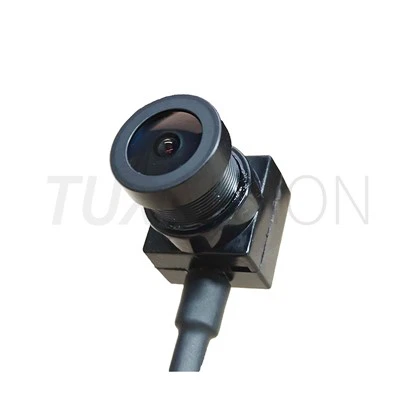
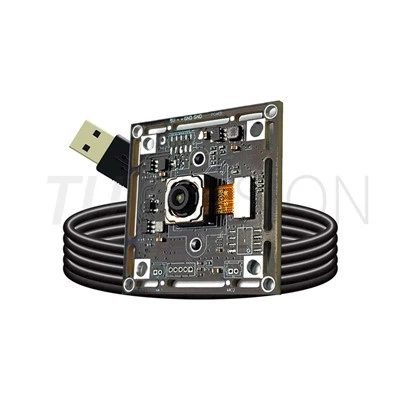
More than just a high-resolution sensor is required for a dependable USB camera module for barcode scanners. The ability to consistently capture a barcode in a barcode scanning device depends on a number of factors, including picture clarity, focus distance, field of vision, exposure control, and USB compatibility. A 2MP camera module can already offer sufficient information for 1D and 2D barcode recognition for many embedded scanners, keeping the device small and affordable. The final device's mechanical structure, lighting circumstances, barcode size, and scanning distance should all be taken into consideration while choosing the camera module.
Instead of making the scanner enclosure suit a standard camera, the camera module can be modified around the scanner for OEM and ODM projects.

Why Use a Camera Module for Barcode Scanning?
Instead than depending solely on conventional laser scanning, modern barcode scanners are increasingly using image-based recognition. The barcode is captured as an image using a CMOS camera, which enables the decoding software to handle various barcode orientations and types.
The camera module of embedded barcode scanners is in charge of giving the decoding system a clear and consistent image. The decoding algorithm has less relevant information to work with if the acquired image is deformed, overexposed, too dark, or blurry.
Image Clarity Matters More Than Resolution Alone
Better barcode recognition is not always correlated with a greater megapixel count. When the optical design, focus range, exposure, and working distance are appropriately matched, a well-matched 2MP camera module can outperform a higher-resolution sensor.
For many retail, logistics, kiosk, and embedded barcode applications, for instance, a 2MP sensor producing 1920x1080 images can offer enough information. Making sure the barcode takes up enough pixels in the taken picture is crucial.
How to Select a USB Camera Module for Barcode Scanner
1. Start with the Barcode Size and Working Distance
The first selection point should not be megapixels. Measure the distance between the barcode and the camera, then determine the smallest barcode or module that needs to be recognized.
A scanner used for small product labels may require a different lens and focus setting from a logistics scanner designed to read larger labels from a longer distance. The lens focal length and field of view should therefore be selected together with the sensor.
2. Choose the Resolution According to the Application
For many barcode scanning systems, 2MP is a practical starting point. It provides Full HD image output without adding unnecessary processing or storage requirements.
Higher-resolution options such as 5MP or 8MP become more useful when the system needs to capture small codes, support OCR, identify detailed labels, or provide a wider field of view while retaining sufficient pixel density.
For projects that need a compact 2MP solution, see our 2MP USB Camera Module for a practical reference design.

3. Fixed Focus or Autofocus?
If the barcode is always presented within a controlled distance, a fixed-focus lens is usually simpler and more stable. It can reduce mechanical complexity and keep the cost under control.
Autofocus becomes more useful when the scanning distance changes. For example, a handheld or self-service device may need to read codes from different distances. In that case, an autofocus camera module can maintain image clarity across a wider working range.
4. Consider Lighting and Exposure
Barcode scanners rarely operate under perfectly controlled lighting. Reflections from glossy packaging, strong ambient light, dark environments, and uneven illumination can all affect image quality.
Automatic exposure, automatic white balance, and gain control can help maintain a usable image under changing conditions. For scanners working in darker environments, the optical and illumination design should be evaluated together rather than selecting the camera independently.
5. Check the USB Interface and System Compatibility
For embedded barcode scanners, USB is attractive because it simplifies integration with host systems. A UVC-compatible USB camera module can provide a standard video interface and reduce driver development work.
Before finalizing the module, check the required USB version, output format, resolution, frame rate, connector position, cable length, and operating system. These details can become important when the scanner is integrated into a compact enclosure.
2MP vs. Higher-Resolution Camera Modules for Barcode Scanning
The best camera module depends on what the scanner actually needs to capture. A 2MP module is often sufficient for standard barcode reading, while higher-resolution modules provide additional image detail for smaller codes or multifunctional imaging systems.
- 2MP: Suitable for standard 1D/2D barcode scanning, kiosks, POS equipment, and compact embedded scanners.
- 5MP: Useful when more image detail is required without moving to a larger 8MP solution.
- 8MP: Better suited to applications combining barcode scanning with OCR, document imaging, or detailed visual inspection.
For applications where barcode reading is combined with document capture or OCR, an 8MP USB Camera Module can provide additional image detail.
Camera Module Selection Thinking for Barcode Scanner Projects
A practical selection process is to work backward from the final scanning result:
- Define the smallest barcode that must be recognized.
- Measure the normal and maximum scanning distance.
- Select the lens FOV and focal length based on the target area.
- Choose 2MP, 5MP, 8MP, or another resolution based on the required pixel density.
- Evaluate fixed focus or autofocus according to the working distance.
- Test exposure and image clarity under the actual lighting conditions.
- Confirm USB interface, connector, cable, dimensions, and host compatibility.
- Only after these points are confirmed should the camera module be locked for mass production.
This approach usually avoids a common mistake: choosing the sensor first and trying to make the lens and enclosure fit afterward.
Where USB Camera Modules for Barcode Scanners Are Used
USB camera modules can be integrated into a wide range of barcode and identification equipment, including:
- Retail POS barcode scanners
- Self-service checkout machines
- Warehouse and logistics scanners
- Smart vending machines
- Parcel sorting equipment
- Industrial identification systems
- Smart kiosks and self-service terminals
- OCR and document scanning equipment
- Access control and identity verification terminals

Custom USB Camera Modules for Barcode Scanner Integration
Manufacturers of barcode scanners frequently have optical and mechanical specifications that an off-the-shelf camera cannot satisfy. A particular PCB size, connector location, cable length, lens, FOV, sensor, or housing structure may be required for the camera module.
The available space and imaging needs of the scanner can be taken into consideration when designing a bespoke camera module. During the integration stage, it is possible to assess sensor selection, lens matching, focus configuration, cable, connector, PCB layout, and other hardware aspects.
Increasing resolution is not the only objective for OEM and ODM projects. The goal is to produce reliable barcode images within the finished scanner's mechanical construction and real operating distance.
Conclusion
The barcode, working distance, lens, and lighting conditions should all be taken into consideration when selecting a USB camera module for a barcode scanner, not just the megapixel count. For many barcode scanning systems, a well-matched 2MP camera module might be an effective option; however, when OCR, detailed imaging, or tiny codes are required, 5MP or 8MP solutions might be more suitable.
Instead of being a generic imaging component, the camera module becomes a dependable component of the entire identification system by matching picture clarity, optics, focus, interface, and mechanical design to the real scanner.