As edge AI continues to move from prototypes into real-world products, the role of the camera module is changing. A camera is no longer simply an image acquisition component. For robotics, industrial inspection, smart retail, medical equipment, and other embedded vision systems, the camera module has become an important part of the overall computing architecture.
Recent developments in embedded vision show a clear trend toward higher-resolution sensors, HDR imaging, faster interfaces, compact board-level designs, and greater flexibility for OEM integration. At the same time, edge computing is pushing image processing closer to the camera, reducing the need to send every frame to a remote server.
From Conventional Cameras to Embedded Vision Modules
Traditional industrial cameras are often designed as complete standalone products. Embedded applications have different requirements.
Robots, AGVs, medical devices, smart terminals, inspection equipment, and AI-enabled machines may have very limited installation space. They may also require customized cables, connectors, lens configurations, sensor formats, or mounting structures.
This is where camera modules become particularly useful.
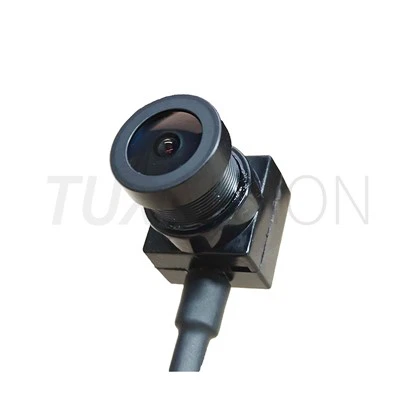
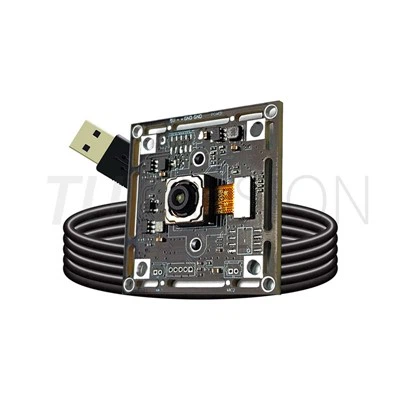
A compact USB camera module or MIPI camera module can be integrated directly into an OEM product rather than being installed as a separate camera system.
The result is a more flexible imaging architecture that allows engineers to design the camera around the application.
Resolution Is No Longer the Only Priority
Higher resolution remains important, but it is only one part of camera module selection.
In practical embedded vision applications, engineers often need to balance several factors:
Image resolution
Frame rate
Sensor size
Global shutter or rolling shutter
HDR performance
Low-light sensitivity
Lens field of view
Autofocus capability
Interface bandwidth
Power consumption
Mechanical dimensions
Host-platform compatibility
For example, an inspection system operating on a fast production line may benefit more from a high-frame-rate global shutter sensor than from simply increasing the resolution.
Similarly, a robotics application may require a wide-angle lens, low-light performance, or autofocus because the working distance and lighting conditions can change continuously.
This means that camera module selection is increasingly application-driven rather than specification-driven.
USB Camera Modules Remain Important for Industrial Applications
USB continues to be a practical interface for many embedded and industrial vision systems.
A USB camera module can provide a relatively simple integration path for systems based on industrial PCs, embedded computers, mini PCs, and other USB-compatible platforms.
UVC compatibility is particularly useful because it can simplify software integration and reduce driver development requirements.
USB 3.0 and newer USB interfaces also provide substantially more bandwidth than USB 2.0, making them suitable for applications requiring higher resolution or higher frame rates.
Recent industrial camera developments continue to combine high-resolution imaging with USB connectivity, HDR, autofocus, and embedded integration capabilities.
Typical applications include:
Machine vision
Industrial inspection
Robotics
AGV and AMR systems
Barcode and QR code scanning
Smart retail
Medical equipment
Digital microscopy
Intelligent transportation
Security and monitoring
MIPI Camera Modules for Embedded AI Systems
While USB is convenient for many systems, MIPI CSI-2 camera modules are increasingly attractive for embedded platforms where size, power consumption, and direct processor integration are important.
MIPI CSI-2 is widely used in embedded computing platforms because it allows image data to be transferred directly between the camera sensor subsystem and the host processor.
This architecture can be particularly useful for:
Edge AI devices
Robotics platforms
Embedded vision systems
Smart cameras
Autonomous machines
Portable medical equipment
Industrial controllers
Recent embedded vision products have continued to expand MIPI camera options, including high-resolution global shutter cameras designed for machine vision and AI applications.
For OEM developers, the choice between USB and MIPI should therefore be based on the complete system architecture rather than camera specifications alone.
HDR and Low-Light Performance Are Becoming More Important
Real-world environments rarely provide perfect lighting.
Industrial inspection systems may need to operate under strong reflections. Outdoor robots can move between bright sunlight and shadows. Medical equipment may work with uneven illumination. Smart retail devices may need to recognize objects under mixed indoor lighting.
As a result, HDR and low-light performance are becoming increasingly important features for embedded camera modules.
Recent camera products have introduced advanced HDR technologies together with high-resolution sensors and NIR sensitivity to address difficult lighting conditions.
For OEM engineers, this means that sensor selection and lens selection should be considered together with the actual lighting environment.
The Rise of Custom Camera Modules
Another important trend is the increasing demand for customized camera solutions.
An off-the-shelf camera may provide the required resolution but still fail to fit the mechanical or optical requirements of the final product.
OEM projects may require customization of:
Sensor
Different applications may require different sensor characteristics, including:
High resolution
High frame rate
Global shutter
HDR
Low-light performance
Monochrome imaging
NIR sensitivity
Lens
Lens selection directly affects the usable image.
Depending on the application, an OEM may require:
M12 lens
Wide-angle lens
Fixed-focus lens
Autofocus lens
IR-compatible lens
Custom field of view
Mechanical Design
The PCB shape, mounting holes, connector position, cable length, and overall dimensions may need to be modified to fit the customer's equipment.
Interface
Different projects may require USB 2.0, USB 3.0, USB 3.2, or MIPI CSI-2 depending on the host platform and bandwidth requirements.
This trend toward customized embedded vision hardware is also reflected in the industry, with camera manufacturers increasingly offering OEM engineering across USB, MIPI CSI-2, and other interfaces.
What Should OEMs Consider When Selecting a Camera Module?
Instead of starting with megapixels, engineers can begin with the application requirements.
A practical selection process can follow these steps:
1. Define the application
Determine whether the camera will be used for inspection, robotics, medical imaging, scanning, monitoring, or another application.
2. Determine the required image quality
Consider resolution, frame rate, shutter type, HDR, sensitivity, and lighting conditions.
3. Select the interface
Choose USB or MIPI according to the host processor, software environment, bandwidth, and mechanical requirements.
4. Select the lens
Field of view, focal length, aperture, focus method, and IR requirements should match the working distance and target area.
5. Check mechanical requirements
Confirm PCB dimensions, mounting structure, connector position, cable length, and available installation space.
6. Evaluate customization requirements
For OEM products, it is useful to confirm whether the camera manufacturer can customize the sensor, lens, PCB, firmware, cable, and other components.
Camera Modules Are Becoming Part of the System Architecture
The biggest change in embedded vision is not simply that cameras are becoming higher resolution.
The more important change is that the camera is increasingly being designed together with the rest of the system.
A camera module may need to work alongside an AI processor, embedded computer, robot controller, lighting system, sensor network, or industrial communication system.
This makes camera selection an engineering decision rather than a simple purchasing decision.
For manufacturers developing new products in 2026, the best camera module is therefore not necessarily the one with the highest resolution. It is the one that provides the right combination of image quality, interface, optics, size, power consumption, software compatibility, and customization capability.
Building Camera Modules for OEM Vision Applications
At TUXI, we develop USB and MIPI camera modules for embedded vision applications including industrial inspection, robotics, medical equipment, smart retail, machine vision, and other OEM systems.
Our camera modules can be customized according to application requirements, including sensor selection, lens configuration, PCB design, cable length, optical filters, and interface requirements.
From initial sample evaluation to customized production, the objective is to provide an imaging solution that can be integrated into the customer's complete product rather than simply supplying a standard camera.
Looking for a camera module for your next embedded vision project? Contact TUXI to discuss your sensor, lens, interface, and customization requirements.