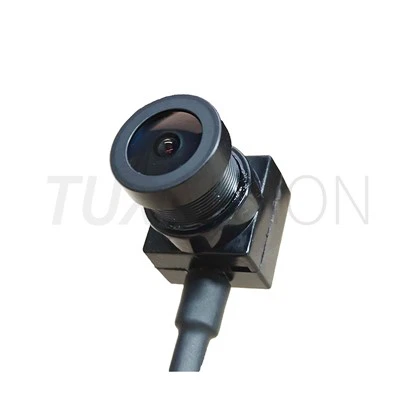
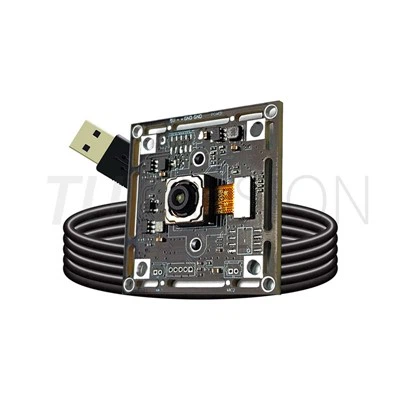
As embedded vision becomes more prevalent in industrial automation, robotics, medical devices, smart retail, UAVs, and edge AI applications, there is an increasing need for adaptable and high-performing USB camera modules.
This tendency is demonstrated by a recent product development in the embedded vision market: camera makers are progressively integrating USB 3.2 interfaces, autofocus, interchangeable M12 optics, HDR imaging, and high-resolution image sensors into small camera modules intended for OEM integration.
The most recent generation of embedded camera modules is increasingly being developed as a flexible vision platform rather than treating the camera as a fixed image component.
High-Resolution Camera Modules for Embedded Vision
In embedded vision applications, image quality is becoming more and more crucial.
Robotics, medical equipment, intelligent transportation systems, smart retail terminals, and industrial inspection systems frequently need to take detailed pictures in shifting lighting. As a result, there is a greater need for camera modules that use CMOS image sensors with improved resolution.
While preserving small board-level designs appropriate for OEM products, recent embedded vision devices have showed setups using 5MP, 8MP, and higher-resolution sensors.
Resolution on its own is insufficient for system developers. To produce consistent image quality, the image sensor, lens, ISP, interface, exposure control, and optical design must cooperate.
When a camera module is incorporated into an edge AI or machine vision system, this is especially crucial.
HDR and Low-Light Performance Are Becoming More Important
One of the major challenges for embedded cameras is inconsistent lighting.
A camera used in an industrial environment may need to capture both bright reflective surfaces and dark areas in the same scene. Similar challenges exist in outdoor surveillance, smart transportation and robotics.
As a result, HDR imaging is becoming an important specification for modern camera modules.
For example, recent M12 USB camera module products have highlighted high dynamic range performance as a key feature, allowing the camera to maintain more usable image information in scenes containing strong differences between bright and dark areas.
For OEM developers, this can reduce the amount of image-processing compensation required at the software level.
M12 Lens Interfaces Give OEM Engineers More Flexibility
Another important trend is the increasing use of M12 lens interfaces.
A fixed-focus camera module may work well for one application but become unsuitable when the field of view, working distance or installation position changes.
An M12-compatible design gives system integrators more flexibility to select different lenses for different applications.
For example, the same camera platform can potentially be configured for:
Wide-angle monitoring
Industrial inspection
Robotics
Smart retail
UAV vision
Medical imaging
Intelligent transportation
Edge AI vision
This approach is particularly valuable for OEM manufacturers developing multiple products based on a common hardware platform.
Instead of redesigning the complete camera PCB for every application, engineers can adjust the optical configuration according to the actual requirements.
USB 3.2 Makes Camera Integration Easier
Interface selection is another important consideration when developing an embedded vision product.
USB remains popular because of its relatively simple integration and broad compatibility.
Recent embedded camera products are increasingly using USB 3.2 Gen 1 together with UVC compliance, allowing camera manufacturers to target Windows, Linux, Android and other embedded computing platforms without requiring completely customized driver development.
For OEM developers, this can shorten development time and simplify system integration.
However, the interface should still be selected according to the application's bandwidth, frame rate, resolution and processing requirements.
For example, a 4K camera used for real-time machine vision may require a different USB configuration from a low-frame-rate monitoring camera.
Camera Modules Are Becoming More Application-Specific
The latest developments suggest that the embedded camera market is moving away from a one-size-fits-all approach.
Different applications require different combinations of:
Image sensor
Resolution
Lens
Field of view
Focus method
HDR performance
Low-light sensitivity
IR capability
USB interface
PCB dimensions
Cable length
Mechanical mounting
For this reason, OEM and ODM customization is becoming an increasingly important part of camera module development.
A camera module supplier is no longer simply providing a sensor and PCB. The supplier may need to work with the customer on sensor selection, optical design, ISP tuning, mechanical structure and firmware compatibility.
What Should OEMs Consider When Selecting a USB Camera Module?
Before selecting a camera module, engineers should define the actual application requirements rather than choosing the highest resolution available.
1. Select the Image Sensor
Sensor size, pixel size, dynamic range, sensitivity and frame rate can directly affect final image quality.
2. Define the Lens and Field of View
The lens should match the sensor format and required field of view. A wide-angle application may require a completely different optical design from a close-range inspection system.
3. Consider Lighting Conditions
For outdoor or industrial applications, HDR and low-light performance may be more important than simply increasing resolution.
4. Confirm the Interface
USB 2.0, USB 3.0 and USB 3.2 should be evaluated according to resolution, frame rate and system bandwidth.
5. Consider Mechanical Integration
Board dimensions, mounting holes, lens height, connector position and cable length can become critical during mass production.
6. Evaluate OEM Customization Capability
For commercial products, the ability to customize the lens, cable, PCB, filter, enclosure and image parameters can significantly reduce integration problems.
The Future of Embedded Camera Modules
Demand for camera modules that are more flexible, smaller, and have higher resolution is being driven by the advancement of embedded vision.
Configurable camera platforms are progressively combining high-resolution CMOS sensors, HDR imagery, replaceable optics, autofocus, USB 3.x connectivity, and small board-level designs.
This means that choosing a camera should be viewed by OEMs and system integrators as part of the whole product design rather than as a straightforward component acquisition.
The imaging basis for industrial automation, robotics, smart retail, medical equipment, security systems, and edge AI products can be provided by a well-designed USB camera module.
Flexible camera module platforms with customized optics, sensors, and interfaces are expected to become more crucial for next-generation intelligent devices as embedded vision continues to grow.