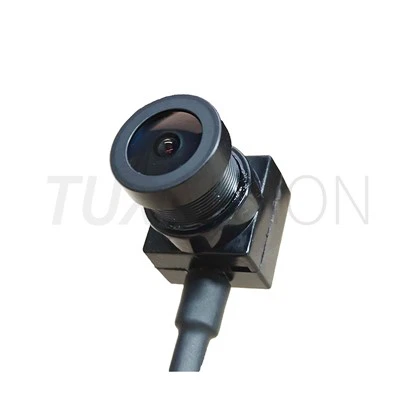
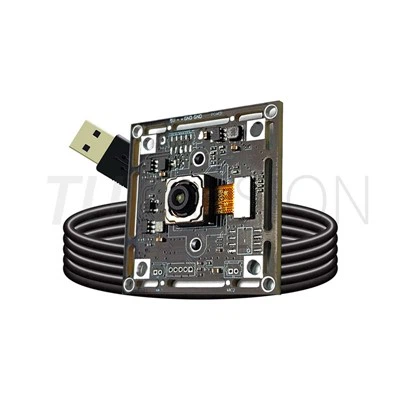
In camera module design, engineers often focus on sensor specs such as 2MP or 4K. However, in real-world imaging, the lens plays a critical role in determining image clarity. Factors like sharpness, distortion, and low-light performance are heavily dependent on lens quality.
How Lens Affects Image Quality
The lens determines how light enters the sensor, but the sensor itself transforms light into signals. Regardless of sensor capability, poor optics will impede performance.
Resolution performance (not just pixels, but actual sharpness)
Clarity of edges throughout the frame
Controlling distortion in wide-angle designs
The impact of light transmission on low-light imaging
varied lenses can yield very varied results, even with the identical 2MP camera module.
Low-Light Performance: Lens Matters More
Light intake is directly impacted by aperture (F-number). An F2.0 lens, for instance, records a lot more light than an F2.8 lens, increasing brightness and lowering noise in low light.

Wide Angle vs Image Quality
Larger field of vision (FOV) is possible with ultra-wide lenses, although edge sharpness and distortion control are sometimes sacrificed. These trade-offs must be balanced in applications such as industrial vision, automotive, and surveillance.

Engineering Selection Strategy
Lens selection is not about choosing the highest spec, but the best fit for the application:
- Define FOV based on use case
- Select aperture based on lighting conditions
- Consider mechanical size constraints
- Balance optical performance and cost
For example, in a 1080P camera module, lens choice directly impacts video clarity and user experience.
Conclusion
While the lens defines the final image, the sensor defines the baseline. In camera module design, ignoring lens selection frequently results in less than ideal outcomes.