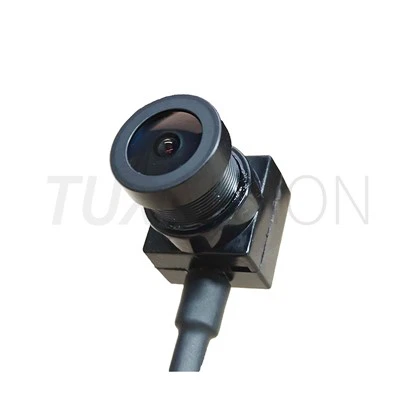
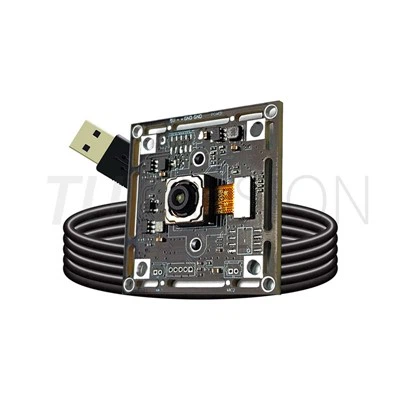
Camera modules are frequently needed to function in low-temperature conditions in industrial equipment, robots, drones, outdoor surveillance, and intelligent transportation systems. When exposed to frigid temperatures, a camera module that functions flawlessly at room temperature may suffer from image fuzz, focusing failure, delayed starting, unreliable communication, or even total image loss.
Much more is impacted by low temperatures than only the picture sensor. Temperature variations can affect the lens, focusing mechanism, IR-CUT filter, PCB components, and optical alignment. Engineers can choose a more dependable camera module for demanding applications by being aware of these consequences.
Why Does Cold Temperature Affect Camera Modules?
The speeds at which different materials expand and compress vary. The camera module's mechanical dimensions, electrical properties, and optical alignment may alter as the temperature drops to -20°C, -30°C, or even lower.
Even a slight dimensional change can have a big effect on image clarity for high-resolution camera modules.
Common Problems in Low-Temperature Applications
- Shift in Lens Focus
Glass, metal, and plastic are commonly used in the construction of lenses. Focus drift may come from minute variations in optical spacing brought on by their disparate thermal expansion coefficients.
- Deterioration of Autofocus Performance
Low temperatures can cause VCM autofocus camera modules to focus more slowly, have less accuracy, or possibly fail.
- Problems with IR-CUT Switching
Because of changes in lubrication and mechanical movement at low temperatures, day-and-night cameras that use IR-CUT filters may have sluggish or failed switching.
- Communication and Startup Issues
At very low temperatures, electronic parts including capacitors, oscillators, and power management circuits may operate differently, resulting in unreliable communication or prolonged starting times.
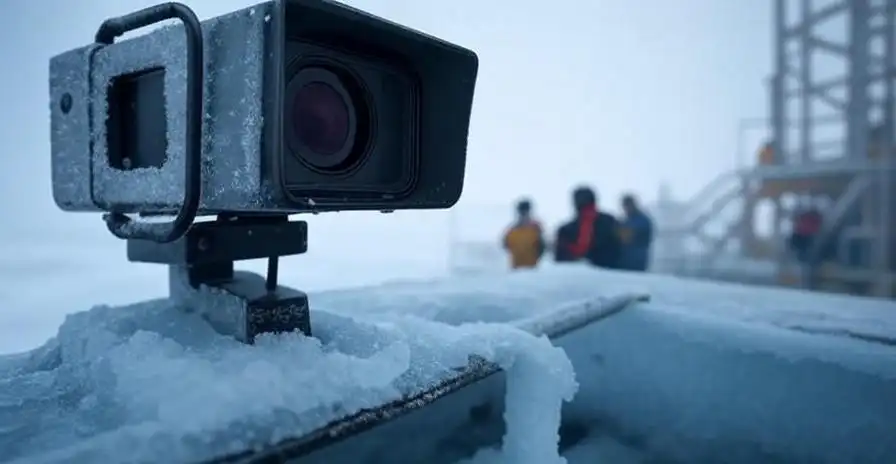
Does Low Temperature Affect Image Quality?
From a sensor perspective, lower temperatures can reduce dark current noise. However, in real-world systems, focus drift, condensation, and mechanical variation often have a greater impact on image quality than sensor noise itself.
As a result, users usually notice softer images rather than cleaner images.
How to Select a Camera Module for Cold Environments
-
Verify Operating Temperature Range
Industrial applications should prioritize camera modules rated for extended temperature ranges such as -20°C to 70°C or even -40°C to 85°C. -
Evaluate Lens Thermal Stability
High-resolution systems benefit from lenses designed to minimize thermal focus shift. -
Assess Autofocus Requirements
For long-term cold-weather operation, fixed-focus designs may provide greater reliability than autofocus systems. -
Perform Real Environmental Testing
Laboratory specifications are only part of the evaluation process. Full system testing under target operating temperatures remains essential.
Camera Module Selection Tips
For outdoor surveillance, intelligent transportation, drones, industrial robots, and cold-chain equipment, temperature performance should be considered alongside resolution, interface type, and optical specifications.
Explore our Camera Module Solutions to compare different sensors and application scenarios.
You may also review our Industrial Camera Module Solutions for demanding low-temperature applications.