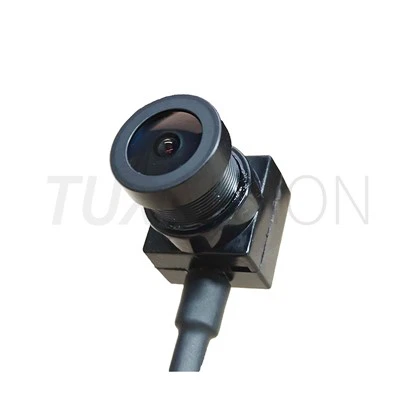
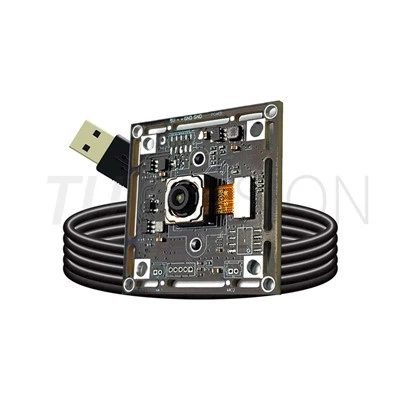
When selecting a camera module, image quality is only one part of the equation. The interface plays a crucial role in determining transmission speed, power consumption, compatibility, and system integration.
Among today's most widely used camera interfaces, USB and MIPI CSI-2 are the two dominant choices. Although both are designed to transfer image data from the sensor, they serve very different application requirements.
This article explains the key differences between USB and MIPI camera modules and helps you choose the right solution for your project.

What Is a USB Camera Module?
A USB camera module integrates a USB controller, allowing it to communicate directly with computers and embedded systems through a standard USB port.
Because USB follows a universal communication standard, these modules are widely used in industrial, commercial, and consumer applications.
Key Advantages of USB Camera Modules
Excellent Compatibility
USB cameras work with almost every major operating system, including Windows, Linux, Android, and macOS. Most systems automatically recognize UVC-compliant cameras without requiring additional drivers.
This makes deployment fast and convenient for developers and end users.
Plug-and-Play Installation
One of USB's biggest strengths is its simplicity.
Simply connect the camera to a USB port, and the operating system automatically detects the device. No complicated hardware configuration is required, making USB ideal for rapid prototyping and commercial products.
High-Speed Data Transmission
Modern USB standards provide sufficient bandwidth for high-resolution imaging.
Typical transmission speeds include:
- USB 2.0: Up to 480 Mbps
- USB 3.0: Up to 5 Gbps
- USB 3.1/3.2: Up to 10 Gbps or higher
These bandwidths easily support Full HD, 4K, and even higher-resolution video depending on the camera configuration.
Lower Development Cost
USB camera modules include the necessary image processing and communication hardware, allowing developers to integrate cameras without designing a dedicated camera interface.
This reduces development complexity, shortens time to market, and lowers overall system cost.

What Is a MIPI Camera Module?
MIPI CSI-2 (Camera Serial Interface) is an industry-standard interface designed primarily for mobile and embedded devices.
Unlike USB cameras, MIPI camera modules connect directly to the processor (SoC) and typically require ISP support from the host platform.
This architecture enables higher performance while minimizing power consumption.
Key Advantages of MIPI Camera Modules
Power efficiency is one of the biggest advantages of MIPI.
Using low-voltage differential signaling (LVDS-like MIPI D-PHY/C-PHY technology), MIPI significantly reduces transmission power, making it ideal for battery-powered devices.
MIPI supports multiple high-speed data lanes that deliver extremely high bandwidth.
This allows camera modules to support:
- High-resolution image sensors
- High frame rates
- Multi-camera systems
- HDR imaging
- AI vision applications
MIPI is commonly used in smartphones capable of recording 4K or even 8K video.
Differential signaling gives MIPI strong immunity to electromagnetic interference (EMI).
Stable signal transmission is particularly important in compact electronic devices where multiple high-speed components operate simultaneously.
MIPI connectors require fewer pins and occupy less PCB space than many traditional interfaces.
This enables thinner devices and highly integrated embedded systems.
USB vs. MIPI Camera Modules
| Feature | USB Camera Module | MIPI Camera Module |
|---|---|---|
| Compatibility | Excellent | Depends on processor platform |
| Installation | Plug-and-play | Requires hardware integration |
| Power Consumption | Higher | Very low |
| Data Bandwidth | High | Extremely high |
| Development Difficulty | Easy | More complex |
| System Integration | External devices | Embedded systems |
| Typical Cost | Lower development cost | Lower BOM in mass production |
| Best For | PCs, industrial equipment, kiosks | Smartphones, tablets, AI devices |

Typical Applications
USB cameras are commonly used for:
- Video conferencing
- Industrial inspection
- Machine vision
- Medical equipment
- Barcode scanners
- Smart kiosks
- Document scanners
- Security monitoring
- Live streaming
MIPI cameras are ideal for:
- Smartphones
- Tablets
- Smart displays
- Embedded Linux systems
- AI edge devices
- Robotics
- Drones
- Autonomous machines
- IoT products
Which Camera Interface Should You Choose?
There is no universal "better" interface-only the one that best matches your application.
Choose a USB camera module if you need:
- Plug-and-play functionality
- Cross-platform compatibility
- Fast product development
- Easy integration with PCs or industrial computers
Choose a MIPI camera module if you require:
- Low power consumption
- Compact device design
- High-performance imaging
- Direct integration with an embedded processor
- Mobile or AI vision applications
Understanding the strengths of each interface helps ensure optimal performance, lower development costs, and a smoother integration process.
Whether you're building an industrial vision system, a medical device, or a smart embedded product, selecting the right camera interface is the first step toward achieving reliable image performance.