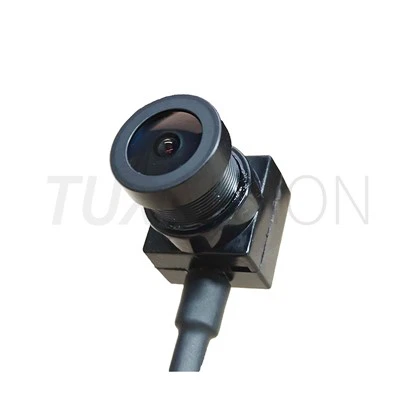
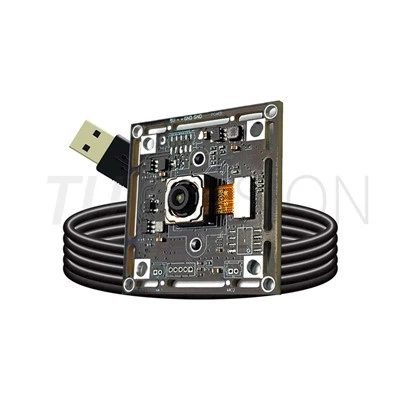
Resolution is not the only consideration when choosing a USB camera module for robot vision. The sensor, lens, field of vision, exposure, frame rate, lighting, operating distance, and processing platform all work together to determine image clarity in a genuine robotic system. The appropriate camera module should be chosen based on the actual vision task rather than a single specification for applications including AGV navigation, AMR perception, robotic picking, object recognition, and industrial inspection.
A 2MP camera module can offer enough detail for object detection and navigation in certain robot vision systems. Higher resolution, global shutter imaging, a broader field of view, or synchronized multi-camera setups might be necessary for other applications. The useful selection logic engineers can employ when selecting a USB camera module for robotics is explained in this article.

What Does a Robot Vision Camera Module Need to Do?
In order for a robot to move or make decisions, robot vision transforms camera views into information. The camera may be used for object recognition, navigation, picking, inspection, depth perception, obstacle detection, and placement, depending on the application.
This implies that the camera module must offer more than just crisp pictures. It requires dependable connectivity with the robot's computing platform and consistent imaging performance.
Typical Robot Vision Applications
AGV and AMR navigation
- Obstacle detection
- Robotic arm positioning
- Object recognition and picking
- Industrial inspection
- Barcode and QR code recognition
- 3D vision and stereo perception
- Autonomous mobile robot perception
How to Choose a USB Camera Module for Robot Vision
Working backward from the robot's vision task is the practical method. Determine what the camera needs to see, how quickly the target is moving, how far away it is, and how much processing power is available before beginning with the greatest resolution possible.
1. Start With the Required Image Detail
Resolution should be related to the smallest object or feature that the vision algorithm needs to recognize.
A 2MP camera module with 1920×1080 output can be a practical choice for navigation, general object detection, monitoring, and many embedded robot vision applications. It offers a useful balance between image clarity, bandwidth, processing load, and cost.
Higher-resolution modules such as 5MP, 8MP, or 4K solutions become more useful when the robot needs to identify small features, inspect surface details, or work from a longer distance.
The key question is not simply "How many megapixels do I need?" but rather "How many pixels are needed on the target area?"
2. Consider Global Shutter for Moving Robots
Robots are frequently moving, and the objects they observe may also be moving. With a rolling shutter sensor, different rows of the image are exposed at slightly different times. Fast movement can therefore introduce geometric distortion.
For applications involving fast robotic arms, conveyor tracking, high-speed picking, or mobile robots moving at higher speeds, a global shutter camera module can provide more consistent motion capture.
For relatively slow-moving scenes, rolling shutter may still be sufficient and can provide a more economical solution.

3. Match the Lens and FOV to the Robot
A camera sensor cannot compensate for an unsuitable lens. Field of view should be selected according to the robot's working distance and the area that needs to be observed.
A wide-angle lens can help an AMR see a larger area for navigation and obstacle detection. A narrower FOV can be more suitable when a robotic arm needs to observe a specific working area or inspect a small object.
For customized projects, lens focal length, FOV, aperture, distortion, and mounting position should be considered together with the sensor size.
4. Frame Rate Matters When the Robot Is Moving
Frame rate determines how frequently the vision system receives new images. Higher frame rates can be useful when the robot moves quickly or needs low-latency visual feedback.
However, higher FPS also means increased data throughput and potentially higher processing requirements. For this reason, engineers should balance frame rate, resolution, interface bandwidth, and computing performance instead of maximizing FPS independently.
5. Check USB Interface and Processing Requirements
USB 2.0 can be sufficient for many 1080P robot vision applications. USB 3.0 or higher bandwidth interfaces become more useful when higher resolution, higher frame rate, or multiple image streams are required.
The host platform should also be considered. A camera module used with an industrial PC may have very different bandwidth and driver requirements from one connected to an embedded controller or edge AI platform.
For projects that require a compact embedded connection, MIPI CSI-2 can also be considered instead of USB.
Image Clarity: Why More Megapixels Are Not Always Better
The entire imaging chain determines the clarity of an image in robot vision. It includes more than just sensor resolution.
The final image sent to the vision algorithm may be impacted by lens quality, focus precision, exposure management, sensor sensitivity, illumination, motion, and image processing.
For instance, compared to a higher-resolution camera that uses an inappropriate lens or operates with severe motion blur, a correctly matched 2MP camera module may produce a clearer and more useful image for object detection.
A Practical Engineering Checklist
- What is the smallest feature the robot needs to recognize?
- What is the working distance?
- How wide does the field of view need to be?
- Is the target moving quickly?
- Is global shutter necessary?
- What frame rate is actually required?
- Which USB or embedded interface is available?
- How much processing power is available?
- Are there mechanical size or mounting restrictions?

2MP vs. Higher-Resolution Camera Modules for Robotics
There is no universal resolution that fits every robot. A 2MP camera module is often a sensible starting point when the robot mainly needs navigation, object detection, or general perception.
For inspection, detailed object recognition, or applications where the camera is mounted farther from the target, higher-resolution modules may provide additional useful information.
Engineers should therefore compare resolution together with lens selection, FOV, frame rate, shutter type, lighting, and processing requirements.
For projects starting from a 1080P requirement, our 2MP Robot Camera Modules can be used as a reference for robotics applications.
For applications requiring more image detail, our 8MP Camera Modules provide another option for evaluating higher-resolution imaging requirements.
USB Camera Module Customization for Robot Vision
For a robot, standard camera modules might not be the ideal choice. Robot designs can differ greatly in terms of mechanical space, cable routing, connector position, lens angle, and computing platform.
The camera setup for OEM and ODM projects can be modified to fit the finished product. Sensor choice, lens and FOV, PCB dimensions, cable length, connector location, optical filtering, and mechanical structure are examples of potential customisation options.
When depth perception or 3D vision is needed for stereo or multi-camera robot vision, synchronized picture acquisition and matched optical configurations may also be taken into consideration.
Selecting the Right Robot Vision Camera: A Simple Decision Path
Step 1: Define the vision task - navigation, detection, recognition, picking, measurement, or inspection.
Step 2: Determine working distance and FOV before selecting the lens.
Step 3: Select resolution according to the smallest required visual detail.
Step 4: Check movement speed and determine whether global shutter or higher FPS is necessary.
Step 5: Match the camera interface and data bandwidth to the computing platform.
Step 6: Check the mechanical dimensions, connector position, cable routing, and mounting method.
Step 7: Test the complete imaging chain under the actual lighting and movement conditions before moving into volume production.
A Camera Module Should Be Selected as Part of the Robot Vision System
The camera module with the highest resolution or the most sophisticated sensor is not always the best for robot vision. It is the one that fulfills the mechanical and optical requirements, gives the algorithm enough picture data, communicates with the processing platform consistently, and maintains stability when the robot is actually operating.
A well-matched 2MP or 1080P camera module is sufficient for many tasks. A global shutter, a greater frame rate, a higher resolution, or a multi-camera setup might be more suitable for high-speed inspection, detailed recognition, or 3D perception.
For robotics, embedded vision, industrial automation, AGV/AMR, robotic arms, and specialized OEM/ODM projects, TUXIVISION offers USB camera module solutions. The camera can be designed with the final machine's sensor, optical, mechanical, and interface needs in mind.
Need help selecting a camera module for your robot vision project? Start with the robot type, working distance, FOV, required resolution, frame rate, interface, and available installation space. These parameters provide a much better starting point than simply choosing the highest megapixel camera.