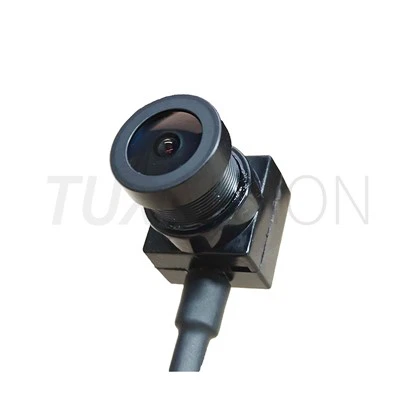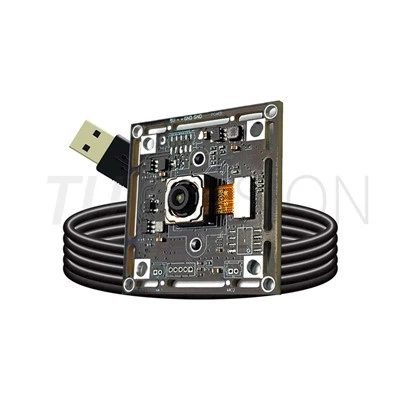
For embedded vision projects that need higher picture quality and nighttime monitoring capabilities, a 4MP Starlight Camera Module may be a sensible option. But choosing the best camera requires more than just comparing megapixels. The outcome is influenced by a number of factors, including sensor performance, lens properties, frame rate, interface compatibility, and available installation space.
Before going from engineering samples to mass production, OEM camera developers should consider these factors collectively.
1. Start with the Image Resolution and Sensor
The first consideration is the image sensor and its actual output capability.
The TUXIVISION 4MP camera module uses the OS04A10 image sensor, with the following specified parameters:
- Image sensor: OS04A10
- Resolution: 4MP
- Maximum resolution: 2688 × 1520
- Maximum frame rate: Up to 90fps
- Focus: Fixed focus
- Interface: MIPI
For applications involving object observation, monitoring, and picture analysis, a 4MP setup offers more image information than a traditional 2MP camera.
Higher resolution does, however, also result in the host processor handling more image data. Before choosing the operating mode, developers should assess the processor's memory bandwidth, image processing capabilities, and MIPI interface capability.
Another characteristic worth considering is the 90 frames per second maximum frame rate, especially for applications that require more frequent image capturing. The final sensor setup and host platform should be used to confirm the actual possible frame rate at the desired resolution.
2. What Matters When Selecting a Starlight Camera?
Starlight camera selection is often misunderstood as simply choosing a sensor with a higher resolution.
In practical applications, low-light imaging depends on several factors:
- Sensor sensitivity
- Lens aperture
- Optical transmission
- Exposure time
- Image processing
- Available scene illumination
A security camera placed close to a building entrance, for instance, might come into contact with both daylight and dimly lit areas. At nite, a pet surveillance camera may function in a living room with very little natural light.
Different optical and exposure setups are needed in these circumstances.
A good lens is very crucial. Variations in lens aperture, optical quality, and field of view can result in dramatically different outcomes even when two modules use the same image sensor.
Because of this, the lens should be chosen based on the installation environment rather than just resolution.
3. Fixed Focus or Autofocus?
The OS04A10 module uses a fixed-focus configuration.
Fixed focus is generally worth considering when:
- The camera has a defined working distance.
- The installation position does not change frequently.
- The equipment needs a relatively simple optical arrangement.
- The application does not require continuous focus adjustment.
When the distance between the camera and the object stays constant, fixed focus may be appropriate for industrial inspection.
The necessary focus distance for home surveillance and pet cameras should be compared to the installation location.
An autofocus setting would need to be considered alternatively if the application involves objects traveling across significantly varying distances.
4. MIPI Interface and Host Processor Compatibility
MIPI is commonly used in embedded camera systems where the camera connects directly to a processor or system-on-chip.
Unlike a standard USB webcam, a MIPI camera module generally requires the host platform to support the corresponding sensor interface and software configuration.
Before selecting a MIPI camera, OEM engineers should confirm:
- Supported MIPI interface and lane configuration.
- Sensor driver availability.
- Sensor initialization and register configuration.
- Power supply requirements.
- Supported image output formats.
- ISP and image-processing compatibility.
The OS04A10 module is specified for Windows, Android, and Linux platforms. Actual compatibility depends on the target hardware, drivers, and software environment.
A platform name alone is not sufficient to establish plug-and-play compatibility.
5. Mechanical Integration: FPC Length and Installation Space
Mechanical compatibility is another important part of camera module selection.
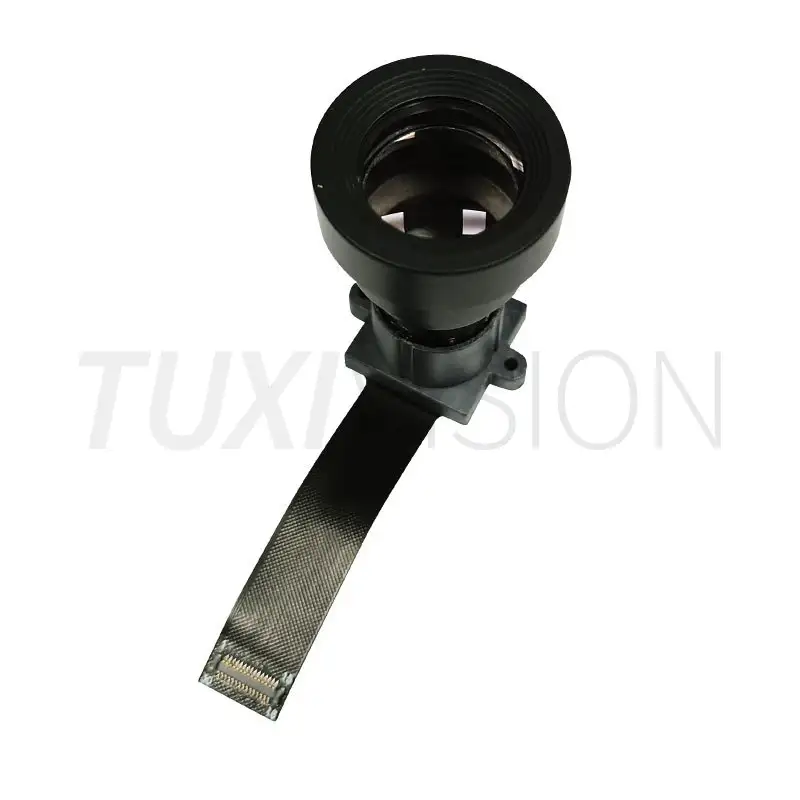
The specified FPC length of this module is 51mm, with customization available.
When preparing an OEM design, engineers should check:
- Available PCB installation space.
- FPC routing direction.
- Connector position and orientation.
- Cable bending radius.
- Lens opening and mounting clearance.
- Distance between the camera and the target object.
A cable that is electrically compatible may still create problems during enclosure assembly if its routing is not considered early enough.
The module weight is approximately 20g. Its mechanical dimensions are not currently specified and should be confirmed before finalizing the enclosure.
6. Application Considerations
Security and Surveillance
For security equipment, resolution and night-time imaging are both relevant. The lens field of view, illumination arrangement, and actual low-light performance should be evaluated at the intended monitoring distance.
Industrial Inspection
The 4MP output can be considered for inspection systems requiring additional image detail. Working distance, focus position, lighting, and frame rate should be matched to the inspection process.
Action Cameras
The maximum specified frame rate of 90fps makes the module worth evaluating for image capture applications where capture frequency matters. Actual recording performance depends on the complete processing and storage system.
Pet and Home Monitoring
Night vision is relevant for monitoring rooms and indoor environments after normal lighting has been switched off. The final infrared configuration and effective viewing distance should be verified through practical testing.
7. What Should Be Tested Before Mass Production?
An engineering sample should be evaluated on the actual target platform rather than relying only on a standalone sensor specification.
A typical evaluation should cover:
- Image output at the required resolution.
- Actual frame rate.
- Daytime and low-light image quality.
- Lens field of view and focus position.
- MIPI communication stability.
- Driver and ISP compatibility.
- Power consumption.
- FPC routing and mechanical installation.
For night vision applications, testing should take place under the expected lighting conditions. A specification describing night vision alone does not establish the effective viewing distance.
The same optical and electronic configuration should also be maintained when moving from samples to mass production.
8. OEM Customization for Camera Module Projects
Different camera products have different mechanical and electrical requirements.
For the TUXIVISION OS04A10 4MP camera module, the specified customization options include custom drawings and logo customization. The 51mm FPC length can also be adjusted.
For a project requiring further hardware adaptation, the following information helps establish the development scope:
- Required resolution and frame rate.
- Target field of view.
- Lens and focus requirements.
- PCB dimensions and mounting position.
- FPC length and connector definition.
- MIPI interface requirements.
- Host processor and operating system.
- Night vision requirements.
- Estimated order quantity.
These details help determine whether the existing configuration is suitable or whether further engineering work is necessary.
Conclusion
Selecting a 4MP Starlight Camera Module requires a balance between image resolution, low-light performance, optical configuration, processor compatibility, and mechanical integration.
The TUXIVISION OS04A10 module provides a 4MP imaging configuration with 2688 × 1520 maximum resolution, a specified maximum frame rate of 90fps, MIPI connectivity, and night vision functionality.
For OEM developers, the next step is to verify the lens, actual frame rate, night-time performance, and host platform compatibility using engineering samples before proceeding to production.