Face recognition terminals are becoming common in access control, mobile payment, identity verification, and smart devices. As these systems evolve, camera selection is no longer simply a matter of choosing a sensor with sufficient resolution.
For applications involving liveness detection, the camera configuration must be evaluated alongside the recognition algorithm, lighting environment, capture distance, and embedded processing platform.
A dual camera module can be considered when the system requires two image inputs. However, the sensor combination, synchronization method, and optical arrangement should be established before hardware selection.
1. Why Consider a Dual Camera Module?
A conventional face recognition system may use a single camera to capture facial images. This architecture is relatively straightforward and can be sufficient for many applications.
Some systems, however, require additional image information or a specific dual-camera arrangement.
Typical applications include:
- Face recognition and identity verification
- Facial liveness detection
- Mobile payment terminals
- Access control equipment
- Smart home devices
- Embedded robotics and vision systems
A dual-camera configuration should be selected according to the actual algorithm requirements. Using two sensors does not automatically improve recognition accuracy or provide 3D depth information. Those capabilities depend on the optical arrangement, image processing, and software implementation.
2. Sensor Selection: IMX307 and GC2145
The image sensor directly affects image quality, sensitivity, and the available operating modes.
The IMX307 and GC2145 combination is one configuration for dual-camera applications.
Night Vision 2MP Mipi Camera Module 1080P Imx307 Csi Module for IoT - 1080P Camera Module and Mipi Camera Module
IMX307
Used in the specified dual-camera configuration. Its suitability should be evaluated against the required image quality, exposure conditions, and host ISP.
2MP Gc2145 CMOS Mipi FF Fixed Focus Micro Compact Ai Camera Module - Gc2145 Camera Module and Compact Camera Module
GC2145
The second sensor in the configuration. Its output resolution, operating mode, and role in the recognition system should be confirmed during integration.
When evaluating this combination, engineers should confirm:
- Whether both sensors operate simultaneously.
- Whether both image streams require synchronized capture.
- The output resolution of each sensor.
- Whether both cameras need autofocus.
- How the host processor handles the two image streams.
These questions are more important than simply comparing the headline resolution.
3. Autofocus and Lens Selection
Face recognition devices are often installed at locations where users stand at different distances from the camera.
A fixed-focus lens can work well when the capture distance is controlled. In interactive terminals, however, autofocus may be useful when the user's position changes.
Lens selection should take into account:
- Working distance
- Horizontal and vertical field of view
- Facial image size at the target distance
- Lens distortion
- Available installation space
- Autofocus operating range
A wider field of view allows a larger capture area, but it can also reduce the size of the face within the image. A narrower lens captures more facial detail at a given resolution but requires more accurate user positioning.
The correct choice depends on the terminal enclosure and the intended recognition distance.
4. WDR and Low-Light Performance
Lighting conditions are frequently overlooked during early camera selection.
For example, an access control terminal installed near a glass entrance may face strong backlighting during the day. At night, the same device may operate under weak indoor lighting.
WDR and low-light imaging therefore deserve attention.
However, the actual result depends on several factors:
- Image sensor characteristics
- Exposure control
- Lens aperture
- ISP processing
- Additional illumination
- Image capture settings
A product described as supporting WDR or starlight imaging should still be evaluated under the actual installation conditions. A single resolution or sensitivity figure cannot describe the complete imaging performance.
5. MIPI Interface and Embedded Platform Compatibility
For compact face recognition equipment, MIPI CSI-2 is commonly considered during embedded hardware design.
Unlike USB cameras, MIPI modules need to be matched to the target processor's camera interface and software architecture.
Before selecting a module, check:
|
Engineering item |
What to verify |
|---|---|
|
MIPI interface |
Lane count and electrical configuration |
|
Processor |
Supported sensor and camera interfaces |
|
ISP |
Sensor initialization and image processing |
|
Driver |
Linux or Android driver availability |
|
Dual-camera input |
Simultaneous stream handling |
|
Synchronization |
Trigger and timestamp requirements |
|
Mechanical design |
PCB dimensions and connector position |
Operating system support should not be interpreted as universal plug-and-play compatibility. Windows, Android, and Linux integration may require different drivers and platform-specific development.
6. Dual-Camera Synchronization: An Important Design Consideration
For systems that process two camera streams together, synchronization needs to be addressed early.
If the two sensors capture images at different moments, the resulting image pair may not represent the same scene state.
This can affect algorithms that depend on comparing two image inputs.
The engineering team should establish:
- Whether hardware synchronization is required.
- Whether both sensors support the intended operating mode.
- The target frame rate for each stream.
- How timestamps or synchronization signals are handled.
- Whether the host processor can process both streams simultaneously.
In particular, a stated maximum frame rate of 60 FPS should not automatically be interpreted as synchronized 60 FPS output from both sensors.
7. OEM Customization: What Should Be Confirmed Before Sampling?
Camera modules used in finished products often need mechanical and electrical adaptation.
For a dual-camera module, the following information should be prepared before prototype development:
- Target application and recognition algorithm.
- Required resolution and frame rate.
- Sensor combination and camera synchronization requirements.
- Lens FOV and working distance.
- PCB dimensions and mounting positions.
- MIPI interface definition.
- Processor model and operating system.
- Connector type and cable length.
- Power requirements and operating environment.
- Expected production quantity.
These details help determine whether the existing configuration can be used or whether hardware modifications are necessary.
8. Example: IMX307 + GC2145 Dual Camera Module
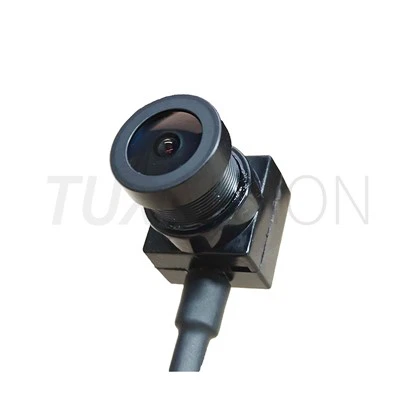
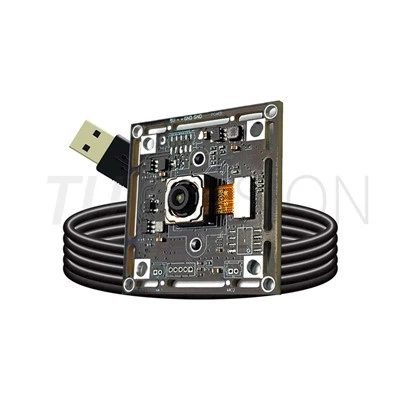
The IMX307 + GC2145 dual camera module is a configuration intended for face recognition, liveness detection, and embedded vision applications.
|
Parameter |
Specification |
|---|---|
|
Sensor |
IMX307 + GC2145 |
|
Resolution |
1920 × 1080 |
|
Maximum frame rate |
Up to 60 FPS |
|
Focus |
Autofocus |
|
Interface |
MIPI |
|
Night vision |
Supported |
|
Weight |
10 g |
|
Cable |
Customizable |
|
Operating systems |
Windows / Android / Linux |
|
Customization |
PCB and logo |
Note: Dual-camera synchronized frame rate and detailed optical specifications require confirmation.
The module can be evaluated for access control, mobile payment, identity verification, smart home equipment, and other embedded camera applications.
Conclusion
It takes more than just comparing sensor resolutions to choose a camera module for liveness detection.
The entire recognition system must take into account the sensor combination, lens configuration, autofocus behavior, lighting circumstances, MIPI compatibility, and synchronization needs.
Early collaboration between the target CPU and camera hardware can help OEM developers minimize integration issues during prototype development and mass production.