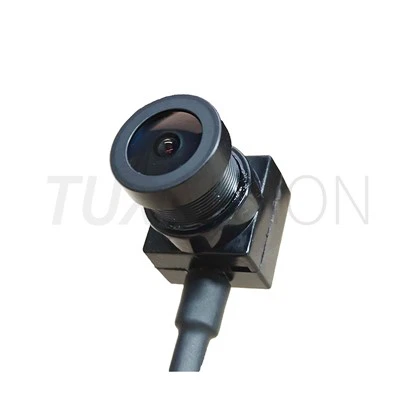
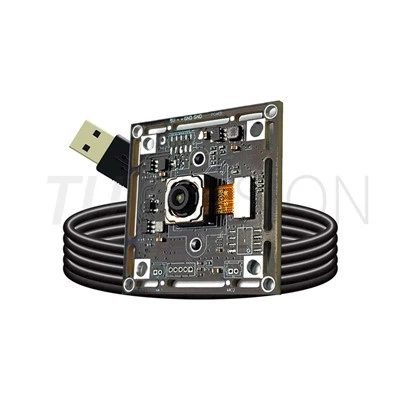
A camera module generally consists of five parts: image sensor, lens, inertial sensor, autofocus module, and flash module. The image sensor and lens are the most important.
1. Image Sensor
The image sensor is the core component of a camera module. It converts optical signals into electrical signals and outputs digital image signals. Currently, the two most common image sensor types on the market are CMOS and CCD. CMOS sensors offer advantages such as low power consumption, high speed, and low price, making them adopted by most mobile phone manufacturers. CCD sensors, on the other hand, offer advantages such as high image quality and low noise, but are significantly more expensive than CMOS sensors.
2. Lens
The lens is another key component of a camera module, responsible for focusing light onto the image sensor. Lens parameters such as aperture, focal length, and field of view vary depending on the shooting scenario. There are three main types of lenses on the market: fixed-focus lenses, dual-camera lenses, and multi-camera lenses. Fixed-focus lenses are characterized by their large aperture, making them suitable for low-light shooting, but they lack zoom. Dual cameras enable effects like optical zoom and background blur. Multi-cameras are even more powerful, capturing images from multiple angles for enhanced clarity and quality.
3. Inertial sensor, autofocus module, and flash module
The inertial sensor accurately detects the device's position and motion, enabling corrections and adjustments during shooting. The autofocus module automatically adjusts the lens' focal length, aperture, and focus point to ensure clear images. The flash module provides supplemental light for shooting in low-light conditions.