One question keeps coming up whether choosing a camera module for smart devices, AI terminals, embedded vision, or industrial inspection:
Can a multi-camera solution be replaced by a wide-angle camera?
Many believe that by expanding the viewing angle, coverage issues can be resolved and hardware costs can be decreased. Wide-angle and multi-camera systems, however, address whole distinct issues from an engineering standpoint. While one expands the field of view, the other expands the quantity of visual data that can be processed.

Wide-angle Means Larger Coverage, Not More Information
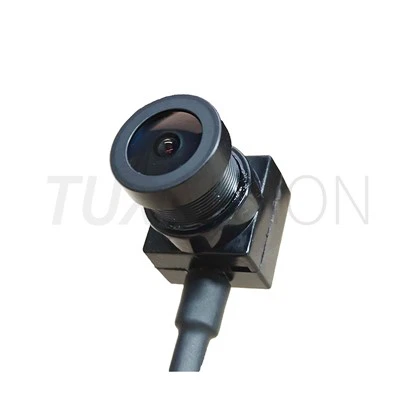
A single camera module may record a wider scene thanks to a wide-angle lens. Depending on the lens design, common viewing angles include 100°, 120°, and even 150°.
A wider field of view can lessen blind spots and make installation easier for applications like room monitoring, kiosks, conference systems, or retail observation.
However, there are trade-offs when expanding the field of view:
- Increased optical distortion close to the margins of the image
- Reduced pixel density for far-off objects
- Diminished clarity of images for tiny targets
- Increased ISP algorithm correction needs
A 2MP sensor spanning 60°, for instance, gives a person significantly more pixels than the identical 2MP sensor covering 150°. The effective detail available for recognition can differ significantly even though both yield identical resolutions.
Multi-camera Solutions Increase Information Instead of Angle
Multi-camera architectures, in contrast to wide-angle lenses, are made to simultaneously gather several kinds of visual data.
Every camera can carry out a specific function, like:
- Identification of faces
- Scanning barcodes
- tracking of objects
- Calculating stereo depth
- AI analysis of images
- Monitoring in multiple directions
Engineers spread the task among several imaging systems rather than having one camera observe everything, which improves algorithm performance and reliability.
Why Image Clarity Matters More Than Viewing Angle
Lens angle is a major factor in many purchasing choices. In actuality, a number of interrelated elements influence visual clarity:
Resolution of the sensor (2MP, 5MP, 8MP, etc.)
- The quality of the lens
- Distribution of pixels
- Conditions of lighting
- Optimization of ISPs
- Working distance
The accessible pixels are dispersed over a greater area at a wider angle. Each object takes up fewer pixels as a result, which may lower the accuracy of detection in AI applications.

Camera Module Selection Strategy
Instead of asking whether a wide-angle lens or multiple cameras are better, engineers usually begin with application requirements.
Scenario 1: Wide-area Monitoring
Conference systems
Retail monitoring
Smart classrooms
Indoor surveillance
Recommendation: A wide-angle camera module is often sufficient and provides a cost-effective solution.
Scenario 2: AI Recognition and Precision Detection
Face recognition terminals
Industrial inspection
Robotics
Autonomous equipment
Depth measurement
Recommendation: Multi-camera architecture generally delivers better recognition accuracy and richer data for AI algorithms.
Selection Is About Trade-offs Rather Than Specifications
There is no universal answer in camera module design. The optimal solution depends on balancing cost, installation space, image clarity, processing capability, and application objectives.
A wide-angle lens solves coverage problems.
A multi-camera system solves information acquisition problems.
Understanding this difference helps engineers select the right architecture from the beginning instead of relying solely on specifications.
Related Camera Module Solutions
Explore our camera module solutions for embedded vision applications.
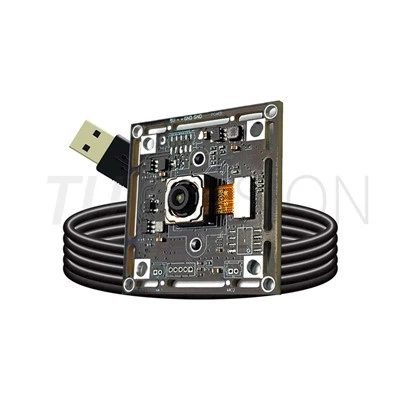
You may also be interested in our USB camera module products for AI devices, industrial automation, and smart terminals.