Cameras frequently encounter difficult illumination conditions in real-world image situations. A backlight scenario, in which intense sunlight penetrates via a window or an entrance area, is a common example. Inadequate image processing can cause dark areas to lose crucial features and bright areas to become overexposed.
Wide Dynamic Range (WDR) technology is crucial in this situation.
WDR camera modules are widely used in industrial vision, robotics, access control, surveillance, and smart devices because they balance excessively bright and dark areas within a single frame to produce crisper images.
What Is Dynamic Range?
Dynamic Range refers to the ability of a camera sensor to capture details between the brightest and darkest areas of an image.
A standard camera usually provides around 60dB dynamic range, while WDR-enabled camera modules can achieve a higher dynamic range level, allowing better image performance in high-contrast environments.
A higher dynamic range means the camera can preserve more details in:
- Bright sunlight areas
- Dark shadow regions
- Backlight scenes
- Indoor and outdoor transition environments
How Does WDR Technology Work?
There are mainly two approaches to achieve wide dynamic range imaging.
Single Exposure WDR
This method uses specially designed image sensors with different sensitivity responses to light.
The sensor can capture a wider range of brightness information within one exposure process.
Multi-Exposure WDR
This is the most common WDR technology used in modern camera modules.
The camera captures multiple frames with different exposure times:
Short exposure captures highlight details
Long exposure captures shadow details
The ISP then combines these images into one optimized frame with improved brightness balance.
This method helps cameras achieve better performance in complex lighting conditions.
Sensor-Based WDR vs ISP-Based WDR
Sensor-Based WDR
The exposure adjustment and image combination are handled directly by the image sensor.
Advantages:
Mature technology
Stable performance
Widely adopted in security and industrial cameras
ISP-Based WDR
The ISP (Image Signal Processor) performs the image fusion process.
Advantages:
More flexible configuration
Can work with standard sensors
Allows balance between frame rate and WDR performance
However, multi-exposure WDR normally requires higher sensor output speed because multiple frames need to be processed and combined.
Recommended WDR Camera Module Solution: 2MP GC2093 Camera Module
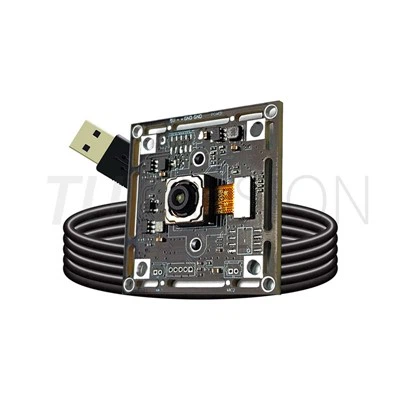
For applications requiring reliable image quality under changing lighting conditions, the GC2093 Camera Module is a practical solution combining 2MP high-definition imaging, WDR capability, and flexible integration options.
The module uses the GalaxyCore GC2093 CMOS sensor and supports 1920×1080 resolution, making it suitable for applications where clear image details and compact design are required.
Key Features:
- 2MP Full HD Resolution
- WDR / HDR support for high contrast environments
- 1080P image output
- USB 2.0 UVC plug-and-play interface
- MJPEG / YUY2 / H.264 output formats
- Multiple lens options for different FOV requirements
- Compact PCB design for easy integration
Typical Applications:
The GC2093 camera module is suitable for:
- Access Control Systems
- Smart Kiosk Equipment
- Industrial Monitoring
- Robotics Vision
- AI Vision Devices
- Video Conferencing Equipment
For scenes such as entrances, parking systems, or industrial environments with strong light differences, the WDR function helps maintain clearer details in both bright and dark areas.