One of the most crucial optical parts of a camera module is an IR-cut filter. IR-cut technology has a direct impact on image clarity, color correctness, and overall imaging performance, although many engineers concentrate on resolution, sensor size, or lens parameters.
Engineers can select the best camera module for embedded imaging, smart devices, industrial vision, and surveillance by knowing how IR-cut operates.
What Is an IR-cut Filter?
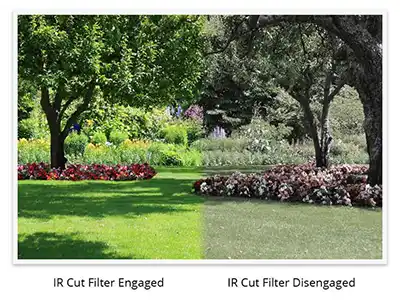
The CMOS sensor is shielded from near-infrared radiation by an IR-cut (Infrared Cut) filter.
CMOS sensors are capable of detecting both visible and infrared wavelengths, but the human eye can only see visible light. Infrared light can degrade image quality if it isn't filtered.
Why Remove Infrared Light?
Boost Color Accuracy
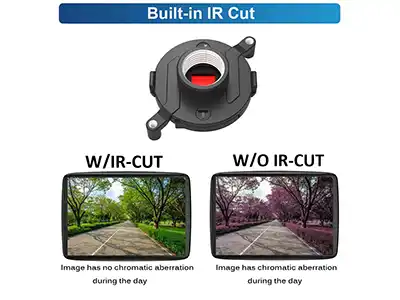
RGB color processing is hampered by infrared light, which results in color distortion and imprecise reproduction.
- Reds that appear purple
- Greens that are grayish
- Distortion of skin tone
- White balance problems
Boost the Clarity of the Image
Compared to visible light, infrared wavelengths focus differently. Even in high-resolution camera modules, additional infrared energy can diminish image clarity and sharpness.
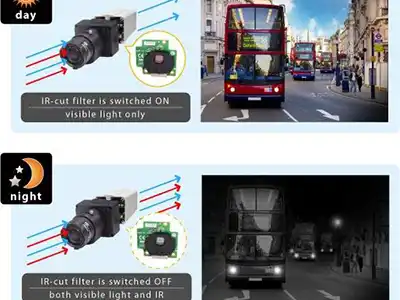
Why Do Night Vision Cameras Use Infrared?
In low-light environments, infrared illumination significantly improves visibility.
- Day Mode: IR-cut enabled
- Night Mode: IR-cut removed for IR illumination
Selection Guide for Camera Modules
Applications Requiring IR-cut
- cameras for security
- Conferencing via video
- Inspection of industries
- Smart home appliances
- Electronics for consumers
Applications That Would Rather Not Use IR-cut
- Identification of faces
- Identification of iris
- NIR photography
- Analysis of agriculture
- Systems for infrared vision