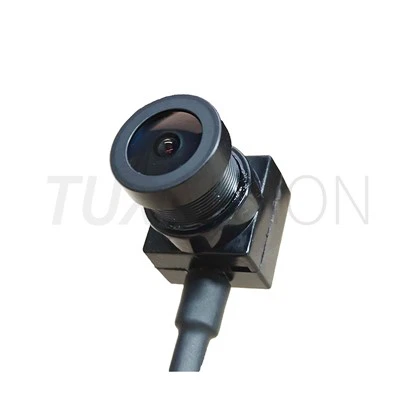
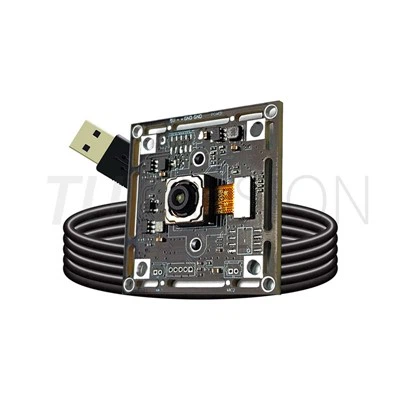
The USB Camera Module for Smart Retail is no longer just for surveillance as retail equipment becomes more sophisticated. Self-checkout terminals, smart shelves, inventory systems, electronic price label checking, customer analytics, and AI-powered retail gadgets have all incorporated it extensively. It is more important to balance image quality, lens characteristics, interface compatibility, and long-term stability when choosing a camera module than it is to choose the greatest resolution.
A well-optimized 2MP USB camera module currently provides outstanding image clarity for the majority of embedded retail systems while using little computing power and bandwidth. When precise product features or barcode recognition at greater distances are needed, higher resolutions like 5MP or 8MP become useful.

Why USB Camera Modules Are Popular in Smart Retail
USB cameras simplify hardware integration by supporting UVC standards on Windows, Linux, Android and many embedded platforms. Compared with customized camera interfaces, USB significantly shortens development cycles while maintaining stable image transmission.
- Plug-and-play UVC compatibility
- Easy integration with Edge AI computers
- Stable Full HD video transmission
- Compact design for kiosks and vending machines
- Flexible cable lengths and connector options
- Suitable for continuous 24/7 operation
Typical Smart Retail Applications
Self-Checkout Systems
Camera modules help identify products, monitor scanning behavior, and improve checkout efficiency through AI-assisted vision.
Smart Shelves
Continuous shelf monitoring enables automatic inventory tracking, out-of-stock detection, and planogram verification.
Retail Analytics
Edge AI devices use camera modules to analyze customer traffic, queue length, dwell time, and heat maps while reducing cloud bandwidth requirements.

Selection Considerations for Engineers
Instead of starting with megapixels, engineers often begin with the actual working environment.
1. Working Distance
Shelf monitoring typically requires a wider field of view, while barcode reading may benefit from a narrower lens with higher pixel density.
2. Lighting Conditions
Retail stores contain mixed lighting from LEDs, sunlight, and displays. Cameras with good dynamic range produce more stable AI recognition results.
3. Image Clarity
Image clarity depends on both the sensor and the optical lens. Low distortion and accurate focus usually improve AI performance more than simply increasing resolution.
4. Long-Term Reliability
Retail equipment often operates continuously. Stable image output, thermal performance, and USB connection reliability are important for reducing maintenance costs.
Recommended Camera Configurations
- 2MP USB Camera Module - POS terminals, kiosks, people counting
- 5MP USB Camera Module - Smart shelves, product recognition
- HDR Camera Module - Stores with strong backlighting
- Wide-angle Camera Module - Shelf monitoring and vending machines
You may also explore our USB Camera Module product series for common embedded retail applications.
For projects requiring higher image quality, our customized USB camera solutions support different sensors, lenses, PCB layouts, cable lengths and enclosure requirements.

Conclusion
The foundation of a successful smart retail camera system is striking the correct balance between system integration, interface, optics, and image quality. Matching the camera module to the real needs of the application, as opposed to aiming for the greatest specifications, typically results in improved AI performance, reduced hardware costs, and a quicker development time.