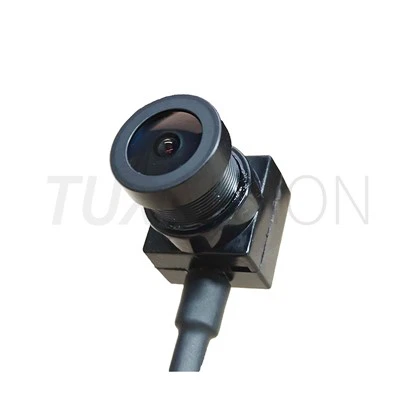
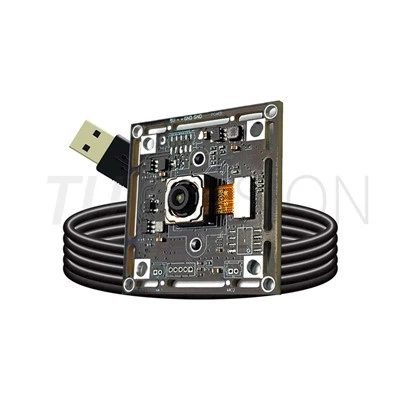
In contemporary security systems, a USB Camera Module for Access Control is essential. The camera module has a direct impact on facial recognition accuracy, user verification time, and overall system reliability whether it is installed in office buildings, factories, residential communities, schools, hospitals, or smart campuses.
From an engineering standpoint, picking the best resolution is not the only consideration when choosing a camera module. Real-world performance is frequently more affected by elements like image quality, dynamic range, low-light performance, lens field of view, USB interface compatibility, and climatic conditions. In many cases, a well-matched 2MP or 5MP USB camera module can produce better identification results than a higher-resolution sensor used in an inappropriate setting.

Why USB Camera Modules Are Widely Used in Access Control Systems
Compared with traditional camera interfaces, USB camera modules simplify hardware integration and software deployment. Most systems support UVC protocols, allowing developers to connect the camera directly to embedded Linux platforms, industrial PCs, ARM devices, or Windows-based terminals.
Typical applications include:
- Facial recognition access control
- Visitor management terminals
- Smart building security systems
- Office attendance devices
- Industrial facility access management
- Residential gate control systems
Key Technical Requirements for Access Control Cameras
Image Clarity and Facial Detail Capture
Image clarity is one of the most important factors affecting recognition performance. Access control algorithms rely on sufficient facial details for accurate identification. In many indoor installations, a 2MP USB camera module already provides enough resolution to capture facial features within common access distances.
Wide Dynamic Range (WDR)
Entrance areas frequently experience difficult lighting conditions. Sunlight through glass doors can create strong backlighting that causes ordinary cameras to lose facial details. WDR technology helps maintain balanced exposure and improves recognition accuracy.
Low-Light and Infrared Performance
Many access control systems operate continuously throughout the day and night. Cameras equipped with infrared support or optimized low-light performance can maintain stable image quality during nighttime operation.
Lens Selection and Field of View
The viewing angle should match the installation distance. Excessively wide-angle lenses may reduce facial pixel density, while narrow-angle lenses can limit user positioning flexibility. Proper lens selection often contributes more to recognition performance than simply increasing resolution.

Engineering Selection Guide for Access Control Camera Modules
Rather than selecting a camera based solely on specifications, engineers should start from the deployment scenario.
Scenario 1: Indoor Office Access Control
- Recommended Resolution: 2MP
- Recognition Distance: 0.5–1.5 meters
- Priority: Image clarity and USB compatibility
Scenario 2: Building Entrances with Strong Backlight
- Recommended Feature: WDR
- Priority: Dynamic range performance
- Application: Glass-door entrances and lobbies
Scenario 3: Outdoor Access Control Systems
- Infrared support recommended
- Enhanced low-light imaging
- Stable operation under changing lighting conditions
Related USB Camera Modules for Access Control Projects
For developers evaluating different solutions, you may review our USB Camera Module product portfolio for various resolution and interface options.
For applications requiring enhanced image quality and AI-based facial recognition, additional camera module solutions can be explored through our custom camera module solutions.
The most effective access control camera is not necessarily the highest-specification model. It is the module that consistently delivers clear facial images under the actual lighting, distance, and installation conditions of the deployment environment.

Conclusion
USB camera modules continue to be one of the most useful image options as access control systems develop toward contactless verification and AI-powered identification. System integrators can achieve dependable recognition performance while lowering development complexity and deployment costs by striking a balance between picture clarity, WDR capabilities, low-light performance, lens configuration, and platform compatibility.