Higher resolution is frequently thought to imply better visual clarity in vision applications. However, in practical embedded vision and industrial camera applications, viewing distance, lens angle, and target size all affect image quality in addition to megapixels.
If the target is too far away or the pixel density calculation is neglected during system design, even a high-resolution camera module may be unable to record important details.
Why Viewing Distance Affects Image Clarity

The number of pixels covering the object progressively drops as it gets farther away from the camera module.
For barcode scanning at 30 cm, a 2MP camera module might be sufficient.However, a far greater pixel density might be needed for facial identification at five meters.Effective pixels per target area are further decreased by wide-angle lenses.Thus, a number of factors work together to determine image clarity:
- Resolution (2MP, 5MP, and 8MP)
- field of view of the lens
- Observing distance
- The desired size
- Cropping an image
Why Higher Resolution Is Not Always Better
Many machine vision projects experience blurry images not because of AI algorithms, but because the camera module selection ignored real working distance requirements.
- 2MP may already be sufficient for close-range inspection
- 8MP increases bandwidth and storage pressure
- Higher resolution also raises ISP workload and power consumption
- Smaller pixels may reduce low-light performance
In industrial imaging systems, the right resolution is usually more important than the highest resolution.
Camera Module Selection Tips
1. Define Working Distance First
Always calculate how far the target will be from the camera before selecting resolution.
2. Understand Target Size
Barcode scanning, facial recognition, and industrial inspection all require different pixel densities.
3. Consider Lens FOV
A wider lens captures more area but reduces effective pixels on the target.
4. Balance System Resources
Higher resolution means:
- Higher bandwidth
- Larger storage requirements
- More ISP processing load
- Higher power consumption
Selecting the Proper Camera Module
Instead of only selecting higher MP sensors, engineers should compute the target pixel density for AI camera, embedded vision, and industrial inspection applications.
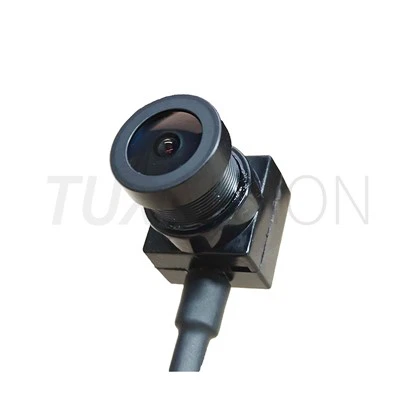
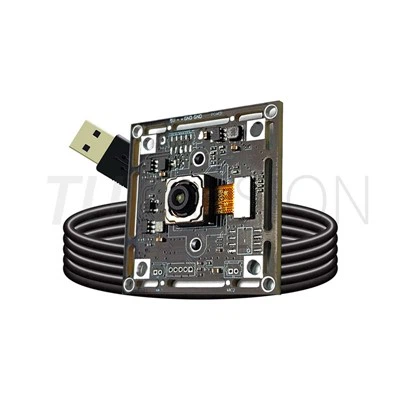
For a variety of resolution options, check out our camera module products.
You can also look at our embedded vision camera modules for small and unique embedded systems.
In conclusion
Megapixels are not the only factor that determines image clarity.
Camera performance is really determined by how well resolution, viewing distance, lens angle, and target size are balanced.
Imaging outcomes are typically improved in real engineering projects when working distance is calculated prior to resolution selection.