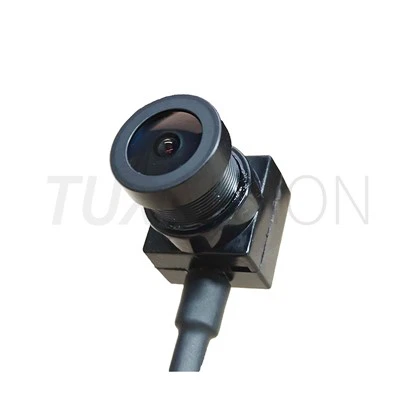
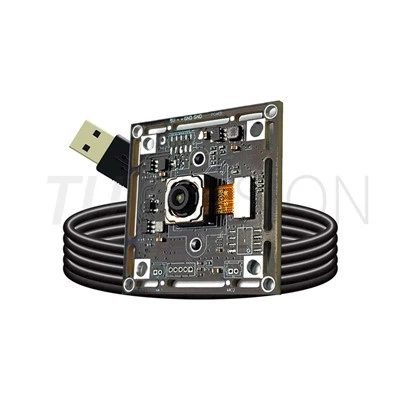
Camera modules that may fit into incredibly small areas while ensuring dependable image collection are frequently needed for medical endoscopic equipment. Sensor size, optical format, frame rate, and light sensitivity are all crucial factors in applications like small endoscopes and compact medical imaging devices.
The HX6946 is a small image sensor intended for imaging applications with little space. It provides a choice for small endoscopic camera designs with its 1/18-inch optical format, 400 × 400 resolution, and 30 frames per second frame rate.
The main features and things engineers should think about when choosing a small endoscopic camera module are explained in this article.
1. Why Miniaturization Matters in Endoscopic Imaging
Unlike conventional cameras, endoscopic imaging systems must operate within a very restricted physical space. The camera assembly needs to fit inside a compact probe while capturing images from areas that may receive limited illumination.
Several factors influence camera module selection:
Optical format: A smaller sensor helps reduce the overall optical system footprint.
Physical dimensions: The sensor package and PCB design must fit the endoscope structure.
Light sensitivity: Limited illumination makes sensor sensitivity an important consideration.
Frame rate: Smooth image acquisition is necessary for real-time observation.
Power requirements: Power consumption and thermal performance should be evaluated in compact equipment.
These requirements make miniature image sensors particularly relevant to endoscopic applications.
2. HX6946 Camera Module: Key Specifications
The HX6946 offers a compact imaging configuration for applications where a small sensor footprint is a priority.
| Specification | Details |
|---|---|
| Image Sensor | OV6946 |
| Resolution | 400 × 400 |
| Pixel Count | 0.16MP |
| Optical Format | 1/18 inch |
| Pixel Size | 1.75 × 1.75 μm |
| Frame Rate | 30 fps |
| Shutter Type | Rolling Shutter |
| Color Format | RGB Bayer |
| Dynamic Range | 65.8 dB |
| SNR | 36.8 dB |
| Sensitivity | 1000 mV/lux-sec |
| Package Type | CSP |
| Supply Voltage | 3.3V |
Its 1/18-inch optical format and CSP package make the sensor suitable for designs where miniaturization is a major consideration.
3. Three Important Factors When Selecting an OV6946-Based Camera
Small Optical Format for Compact Designs
The HX6946 uses a 1/18-inch optical format, making it a candidate for camera systems with strict space constraints.
For miniature endoscopes, the optical format is only one part of the design. Lens diameter, focal length, working distance, PCB dimensions, and mechanical alignment also determine the final camera assembly size.
Engineers should evaluate the complete optical and mechanical structure rather than selecting a sensor based on optical format alone.
Light Sensitivity for Limited-Illumination Environments
Endoscopic imaging frequently involves restricted lighting conditions.
The HX6946 has a specified sensitivity of 1000 mV/lux-sec and an SNR of 36.8 dB. These parameters provide useful reference points when evaluating its imaging performance.
However, actual image quality also depends on lens aperture, illumination intensity, exposure settings, optical transmission, and image processing.
For applications requiring close-range imaging in confined spaces, testing under representative illumination conditions is recommended.
30 fps for Real-Time Image Acquisition
The HX6946 supports a frame rate of 30 fps at its specified 400 × 400 resolution.
This can support real-time image acquisition in applications where high-definition video is not the primary requirement.
Its rolling shutter architecture should also be considered. If the application involves rapid movement or requires accurate capture of moving objects, engineers should evaluate potential rolling-shutter distortion during testing.
4. Potential Applications
Based on its compact optical format and imaging specifications, the HX6946 can be evaluated for:
- Miniature medical endoscopes
- Compact endoscopic imaging systems
- Space-constrained medical imaging equipment
- Micro inspection cameras
- Embedded miniature imaging devices
The suitability of the sensor for a particular medical application depends on the complete camera design, image quality validation, and applicable regulatory requirements.
5. What Should Engineers Confirm Before Ordering?
Before integrating an HX6946-based camera into an endoscopic device, engineers should confirm several additional parameters:
Lens specifications: Field of view, focal length, aperture, and working distance.
Mechanical dimensions: Overall module diameter, PCB dimensions, and mounting structure.
Interface: Confirm the actual module output interface and compatibility with the target processing platform.
Image output: Verify supported output formats, frame rate, and image processing requirements.
Illumination: Evaluate compatibility with the intended LED illumination system.
Power and thermal performance: Measure actual module consumption and temperature under operating conditions.
These details are essential because image sensor specifications alone do not define the performance of a complete camera module.
6. Conclusion: Is HX6946 Suitable for Your Endoscopic Project?
When compact size and a small optical format are more critical than excellent image resolution, the HX6946 is worth considering.
Its 1/18-inch optical format, 400 × 400 resolution, 30 fps frame rate, and specified light sensitivity make it a viable choice for embedded and small endoscopic imaging designs.
The final decision should be made by OEM developers depending on host-system compatibility, mechanical integration, illumination circumstances, and the entire optical assembly.
For your upcoming project, are you looking for a small endoscopic camera module?
For embedded image applications, TUXIVISION offers camera module development and modification help. To discuss sensor choices, lens configuration, PCB size, and customized camera solutions, get in touch with our technical team.