


Custom Imaging Solutions for Compact Monitoring & Embedded Devices
▐ Products Description
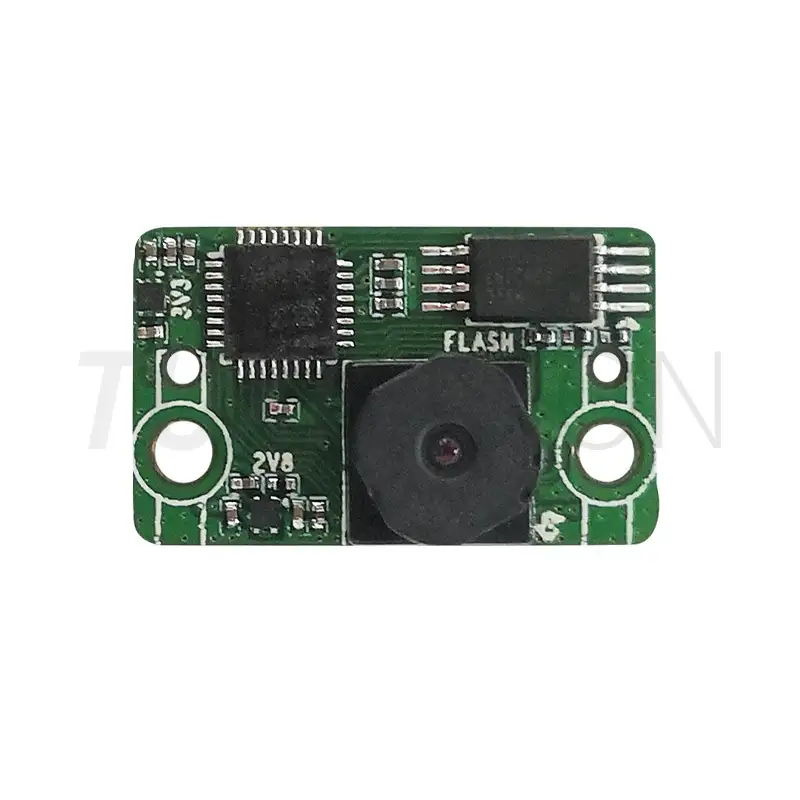
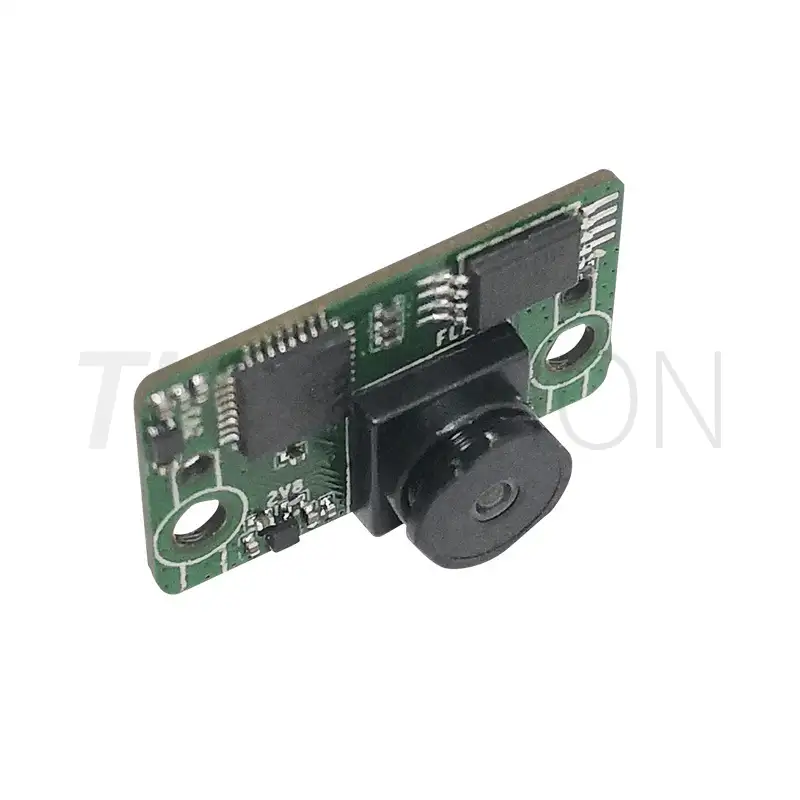
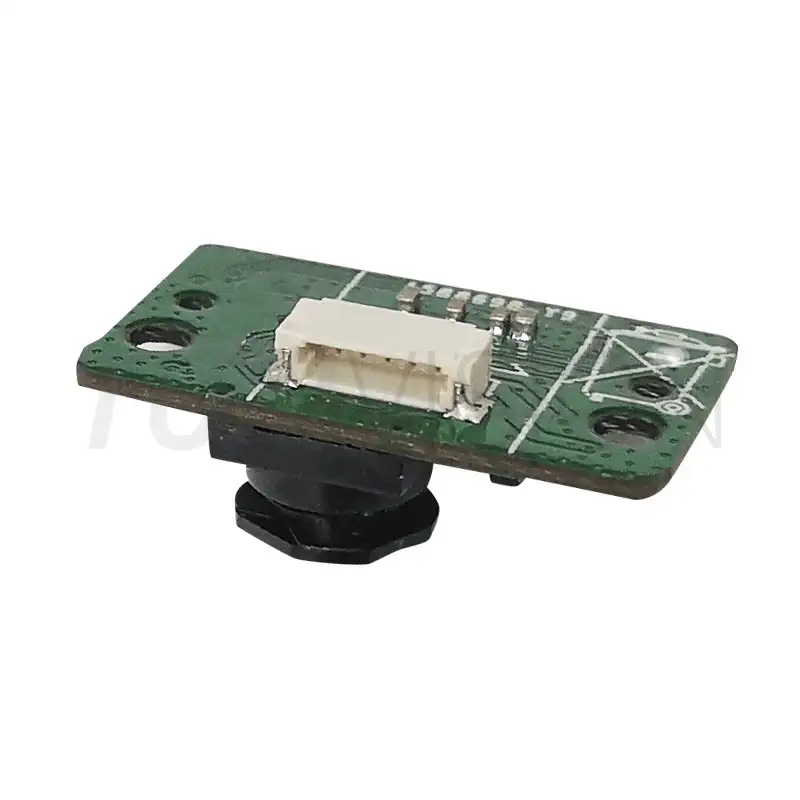
HX8910 USB Camera Module for Compact Imaging Models
The HX8910 is a compact USB camera module built around the GC0328C CMOS image sensor. It captures images at up to 640 × 480 resolution and 30 frames per second, making it suitable for embedded products where a VGA image stream is sufficient and the camera needs to connect through a USB 2.0 interface. Typical application areas include face-recognition equipment, monitoring devices, video doorbells, and video phones.
Optical selection should be considered alongside the installation geometry. The confirmed configuration uses a 2.5 mm focal-length lens with an F/2.4 aperture and a 50° field of view. These values define the current optical setup; if the camera is mounted closer to or farther from the subject, or if the enclosure limits the viewing angle, the lens and mechanical arrangement should be reviewed together.
For an OEM project, the points to check early are the available mounting space, lens-to-subject distance, USB connection, host compatibility, and the required image format. The HX8910 uses automatic exposure and a rolling shutter. Exposure behavior and image output should therefore be evaluated on the target host and under the lighting conditions expected in the finished product.
▐ Core Features
GC0328C VGA Image Image Sensor
640 × 480 at 30 FPS
USB 2.0 Interface
2.5 mm Lens, F/2.4, 50° FOV
▐ Technical Specification
| Item | Specification |
|---|---|
| Model | HX8910 |
| Image Image Sensor | GC0328C |
| Maximum Resolution / Frame Rate | 640 × 480 / 30 FPS |
| Pixel Size / S/N Ratio | 3.4 μm × 3.4 μm / 41 dB |
| Exposure / Shutter | Auto Exposure / Rolling Shutter |
| Video Format | YUV2 |
| Interface | USB 2.0 |
| Lens | 2.5 mm / F/2.4 / 50° FOV |
| Application | Face Recognition / Monitoring Devices / Video Doorbells / Video Phones |
| Distortion | Not specified |
▐ Image Sensor Introduction
The HX8910 uses the GC0328C image sensor, with a maximum resolution of 640 × 480, a 3.4 μm × 3.4 μm pixel size, and a stated signal-to-noise ratio of 41 dB. It operates at 30 FPS and outputs YUV2 through USB 2.0. Automatic exposure and a rolling shutter are part of the confirmed configuration. For an OEM evaluation, the VGA resolution, required subject detail, motion in the scene, and available lighting should be considered together rather than judging the sensor by resolution alone.
▐ Product Advantages
01
A Defined Optical Configuration
The current 2.5 mm lens, F/2.4 aperture, and 50° field of view give the project a clear starting point for mechanical and optical evaluation. Confirm the camera-to-subject distance and the required coverage before fixing the lens position in the enclosure.
02
VGA Output at 30 Frames per Second
With 640 × 480 output at 30 FPS in YUV2 format, the module targets applications that do not require HD or higher-resolution imaging. The host processor and software should be checked for USB 2.0 and YUV2 compatibility.
03
USB 2.0 Host Connection
USB 2.0 provides the connection between the module and the host device. Enumeration, driver support, power availability, and image-format handling depend on the target platform and should be verified during sample testing.
04
Practical OEM Evaluation
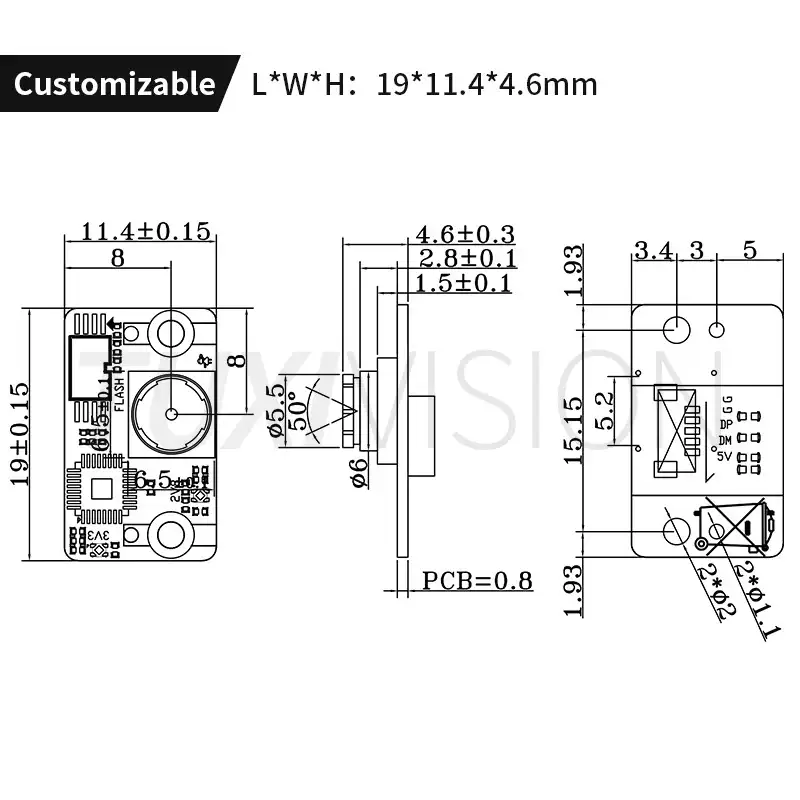
Mounting dimensions, connector orientation, cable routing, and lens clearance all affect how a camera fits into a finished product. These mechanical details should be reviewed alongside the image requirements before the design is frozen.
▐ Why Choose This Camera Module for an OEM Project
Check the Complete Imaging Path
A camera module is only one part of the imaging path. The host processor, USB driver, image format, application software, and enclosure all influence the result seen by the end user. Confirming these interfaces early helps avoid late-stage integration changes.
Review Mechanical Fit Before Tooling
Board outline, fixing points, lens height, cable routing, and connector position can affect the product enclosure. Share the available installation space and mechanical drawings so the configuration can be assessed against the actual device.
Prototype Evaluation Before Volume Production
Sample testing gives the engineering team an opportunity to check image output, exposure behavior, host compatibility, and assembly fit in the target device. Production details should be confirmed after the sample configuration and acceptance criteria have been agreed.
▐ Application


▐ Certifications & Quality Assurance

ISO 9001

ISO 45001

ISO 14001

EMC Test

CE Certified
▐ Application Service
Custom imaging projects often begin with constraints that are not visible in a sensor datasheet: limited enclosure space, a fixed subject distance, a specific viewing angle, or a host platform with defined interface requirements. For the HX8910 configuration, the confirmed baseline is a GC0328C sensor, 640 × 480 at 30 FPS, USB 2.0, and a 2.5 mm F/2.4 lens with a 50° field of view. Any change to the lens, PCB outline, connector, cable, or mechanical mounting should be assessed against the intended device and host system.

Lens & Optics
view more

Image Sensor
view more

Mechanical Design
view more

Connector & I/O
view more
▐ FAQ
Q1:What is the HX8910 camera module?
+
-
The HX8910 is a USB 2.0 camera module using the GC0328C image sensor. Its confirmed output is 640 × 480 at 30 FPS in YUV2 format, with a 2.5 mm F/2.4 lens and a 50° field of view.
Q2:Which parts of the camera configuration can be reviewed for an OEM project?
+
-
Depending on the project scope, the review can cover the lens and field of view, PCB dimensions, connector position, cable routing, and mechanical mounting. Any proposed change needs to be checked against the host interface and required image performance.
Q3:Does the HX8910 provide ONVIF, RTSP, or H.265?
+
-
These are not listed as confirmed specifications of the HX8910 module. ONVIF, RTSP, and H.265 are generally dependent on the complete camera system, including the processor and firmware. They must be evaluated separately for the target product.
Q4:What should be checked when evaluating a sample?
+
-
Check the 640 × 480 image output, 30 FPS operation, YUV2 format, automatic exposure behavior, USB 2.0 host compatibility, and the fit of the 2.5 mm lens in the enclosure. Lighting and subject distance during the test should reflect the intended use conditions.
Q5:What information is needed to assess the camera for our device?
+
-
Useful starting information includes the target resolution, required frame rate, subject distance, field of view, available mounting space, USB host platform, cable or connector requirements, application, and estimated quantity. Mechanical drawings or photos of the installation area can also help clarify lens clearance and mounting constraints.
Hot Tags: custom imaging solution, China custom imaging solution manufacturers, commercial camera board, dental camera webcam, industrial camera imaging module, inspection camera camera module, inspection camera usb webcam, with ir usb camera


