


Liveness Detection Camera Module | IMX307 + GC2145 Dual Camera for Face Recognition
▐ Products Description
Dual-Sensor Imaging for Face Recognition and Liveness Detection
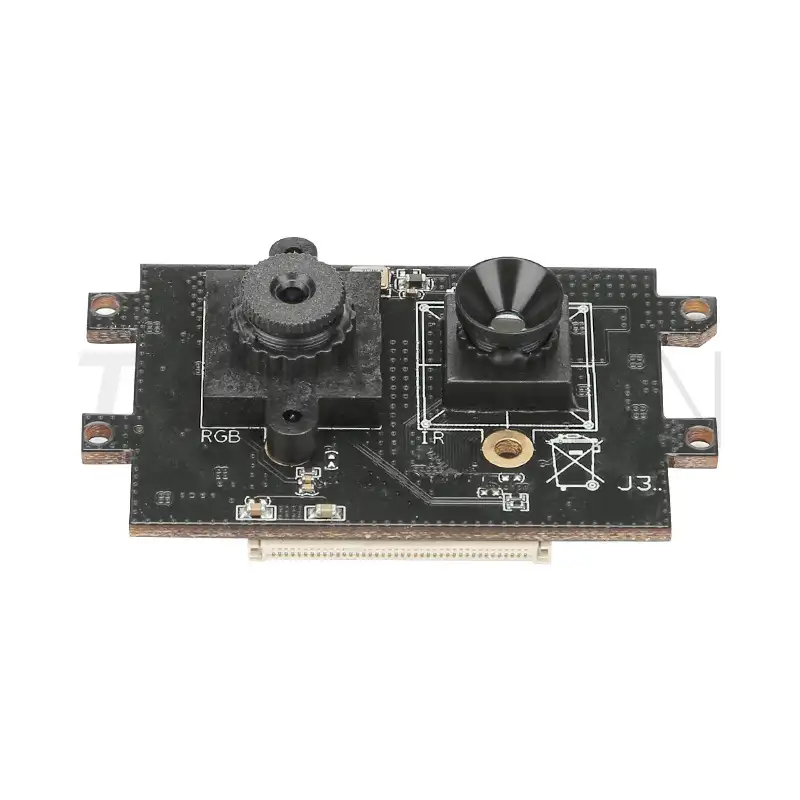
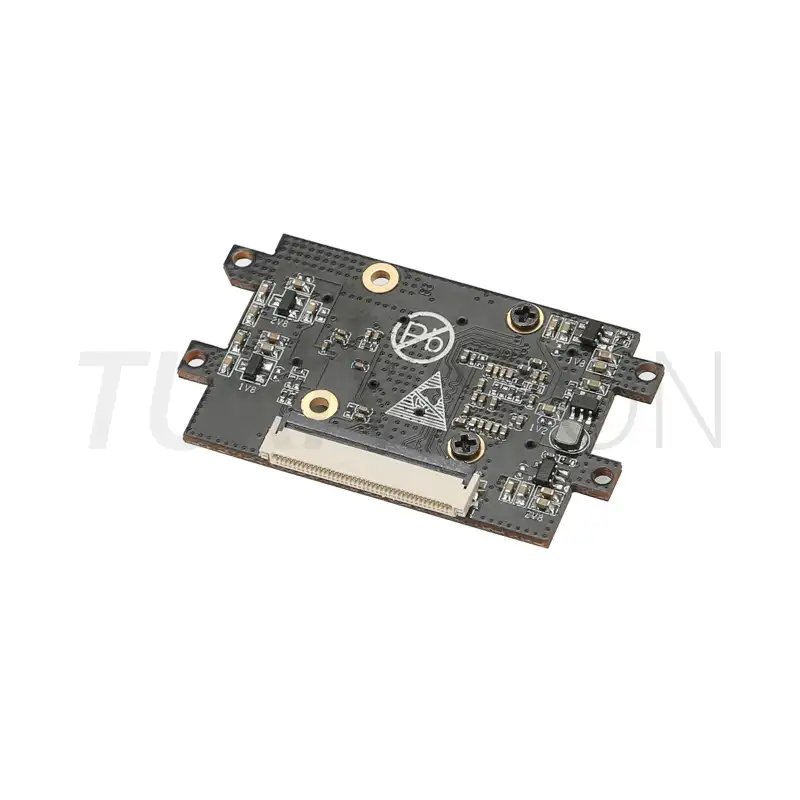
This dual-camera module combines an IMX307 image sensor with a GC2145 sensor in one PCB assembly. It is intended for embedded vision equipment that requires camera input for face recognition, identity verification, and liveness detection. The 1920 × 1080 imaging configuration, autofocus option, and MIPI interface make it suitable for integration into compact electronic devices and intelligent security terminals.
In face authentication applications, camera configuration affects more than image resolution. Focus accuracy, lens field of view, illumination, sensor characteristics, and the processing algorithm all influence the quality of facial image acquisition. A dual-camera arrangement can be evaluated for applications that use multiple image inputs, but the actual liveness detection method and recognition accuracy depend on the host processor and software algorithm.
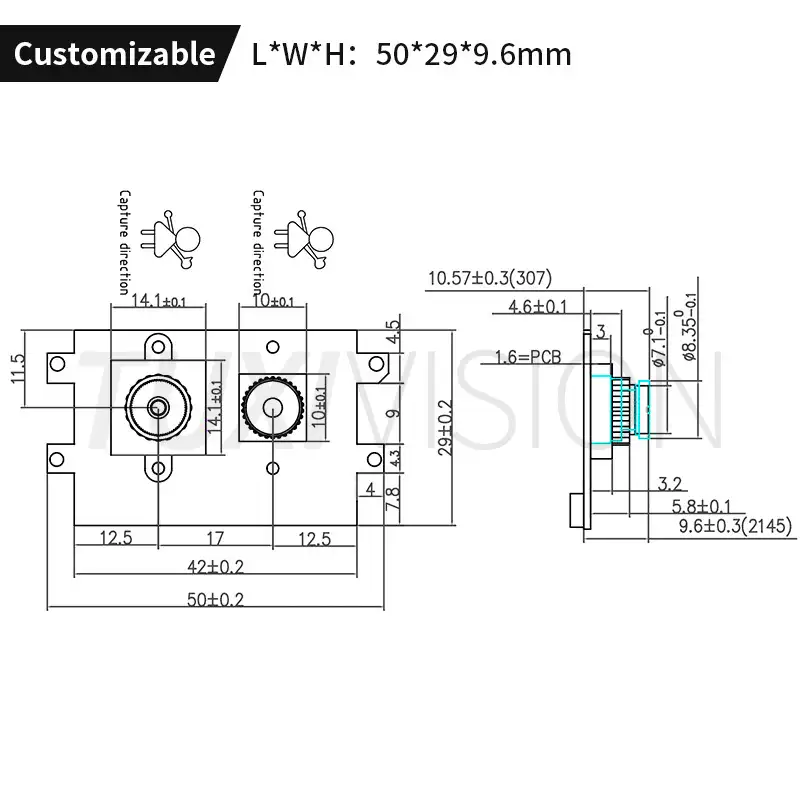
The module uses an MIPI interface for embedded system integration and supports Windows, Android, and Linux platforms subject to driver availability and platform adaptation. PCB dimensions, cable length, connector arrangement, and other mechanical details can be discussed according to the target device. It is suitable for OEM projects involving smart terminals, mobile payment equipment, access control, and intelligent monitoring systems.
▐ Core Features
IMX307 + GC2145 Dual-Sensor Configuration
1920 × 1080 Imaging / Up to 60 FPS
Autofocus and Night Vision Support
MIPI Interface for Embedded Vision
▐ Technical Specification
| Item | Specification |
|---|---|
| Product Type | Dual Camera Module |
| Image Sensors | IMX307 + GC2145 |
| Resolution | 1920 × 1080 |
| Frame Rate | Up to 60 FPS; dual-camera synchronized output to be confirmed |
| Focus | Autofocus (AF) |
| Interface | MIPI |
| Night Vision | Supported |
| Image Features | WDR / Starlight Configuration; performance details to be confirmed |
| Material | PCB |
| Weight | 10 g |
| Cable Length | Customizable |
| Operating Systems | Windows / Android / Linux (driver adaptation required) |
| Customization | PCB / Cable / Logo / Hardware Configuration |
| Applications | Face Recognition / Liveness Detection / Identity Verification |
▐ Sensor Introduction
The IMX307 and GC2145 combination provides two image sensor inputs within one camera assembly. Sensor selection should be considered together with the optical configuration and the processing platform. For face recognition and liveness detection, the image quality required by the algorithm depends on factors such as facial detail, exposure control, focus, illumination, and the distance between the user and the camera.
▐ Product Advantages
01
Two Image Inputs in One Camera Assembly
The IMX307 and GC2145 combination gives equipment developers two sensor inputs to work with. This is useful when the recognition system requires a dual-camera configuration rather than a conventional single-camera design. Sensor roles and synchronized operation should be defined during system evaluation.
02
Autofocus for Changing Capture Distances
In access control terminals and payment devices, users do not always position their faces at exactly the same distance. Autofocus can help maintain image sharpness across the intended capture range. The lens and AF control parameters still need to be matched to the final enclosure and working distance.
03
Night Vision and WDR-Oriented Applications
Lighting conditions can change considerably between indoor entrances, bright windows, and night-time environments. Night vision and WDR-related configurations are relevant to these scenarios. Actual low-light sensitivity and dynamic range performance need to be evaluated with the selected lens, illumination, exposure settings, and image processing.
04
Adaptable for Embedded Device Development
The MIPI interface and PCB-based construction allow the camera assembly to be considered as part of a larger embedded system. Cable length, connector position, board dimensions, and logo requirements can be discussed before the mechanical design is finalized.
▐ Why Choose Our Liveness Detection Camera Module
Camera Configuration Based on the Target Recognition System
Sensor combination, lens selection, and image output requirements should be considered alongside the recognition algorithm. This helps avoid selecting a camera based only on resolution without checking the actual system requirements.
Hardware Adaptation for OEM Products
PCB layout, cable length, connector arrangement, and logo can be discussed according to the installation space and electrical design of the customer's device. These details are best confirmed before sample production.
Prototype Evaluation Before Volume Production
Sample evaluation allows the camera output, autofocus behavior, driver compatibility, and actual mounting conditions to be checked on the target platform before production specifications are fixed.
▐ Application


▐ Certifications & Quality Assurance

ISO 9001

ISO 45001

ISO 14001

EMC Test

CE Certified
▐ Customization Service
For an OEM camera project, the mechanical and electrical details are often just as important as the sensor selection. The PCB outline, mounting holes, cable length, connector type, lens position, and working distance all affect how the camera fits into the final product. These requirements can be reviewed against the customer's enclosure and host platform before the design is finalized.

Lens & Optics
view more

Sensor
view more

Mechanical Design
view more

Connector & I/O
view more
▐ FAQ
Q1: What is a liveness detection camera module?
+
-
It is a camera assembly used as the image acquisition component in a face authentication system. The camera captures facial images, while the actual liveness detection is performed by the host processor and recognition algorithm. The final result depends on the complete hardware and software configuration.
Q2: Which image sensors are used in this dual camera module?
+
-
The module uses an IMX307 and a GC2145 image sensor. The exact role of each sensor, output format, and operating configuration should be confirmed against the target recognition system.
Q3: Does the 60 FPS specification apply to both cameras simultaneously?
+
-
The stated maximum frame rate is up to 60 FPS. Whether both sensors can output at 60 FPS simultaneously with synchronized capture needs to be confirmed during hardware and platform evaluation.
Q4: Which operating systems can be used with this camera?
+
-
Windows, Android, and Linux are listed as target operating systems. Since the module uses MIPI, driver availability, sensor initialization, and ISP compatibility need to be checked against the selected processor platform.
Q5: Can the camera module be customized for an OEM device?
+
-
PCB and logo customization are supported, and cable length can be customized. For an engineering evaluation, please provide the target board dimensions, mounting requirements, connector type, cable length, lens requirements, processor model, operating system, and expected quantity.
Hot Tags: liveness detection camera module, China liveness detection camera module manufacturers, cmos camera, h264 output sensor module, megapixel camera vision module, pcb mount webcam, professional imaging module, without microphone vision module


