


Camera Module Development | Rapid Prototyping & R&D for OEM Camera Systems
▐ Products Description
From Camera Concept to a Testable Engineering Sample
A new camera project rarely starts with a finished module specification. Sensor availability, lens selection, board dimensions, connector position, host interface, and mechanical space all need to be considered together. Early prototyping gives the engineering team a way to check these decisions on hardware before they become costly production changes.
Development work can include component sourcing, 3D-printed mechanical models, prototype PCB fabrication, and test fixtures for repeatable evaluation. These steps help check whether the selected sensor and lens meet the image requirements, whether the board fits the enclosure, and whether the FPC or connector can be routed and assembled as planned. System-level functions such as video compression, network protocols, and power management must be assessed against the target processor and product architecture.
The development process is iterative: build a sample, test it in the intended environment, record the issues, and revise the design where needed. Component sourcing and PCB prototyping are coordinated around the agreed specification. Standard prototype delivery is planned within weeks after final specification sign-off; the actual schedule depends on component lead times, design complexity, and the number of validation rounds.
▐ Core Features
Rapid Component Sourcing
3D-Printed Mechanical Models
Fast PCB Prototyping
Testing Fixtures & Design Iterations
▐ Technical Specification
| Item | Specification |
|---|---|
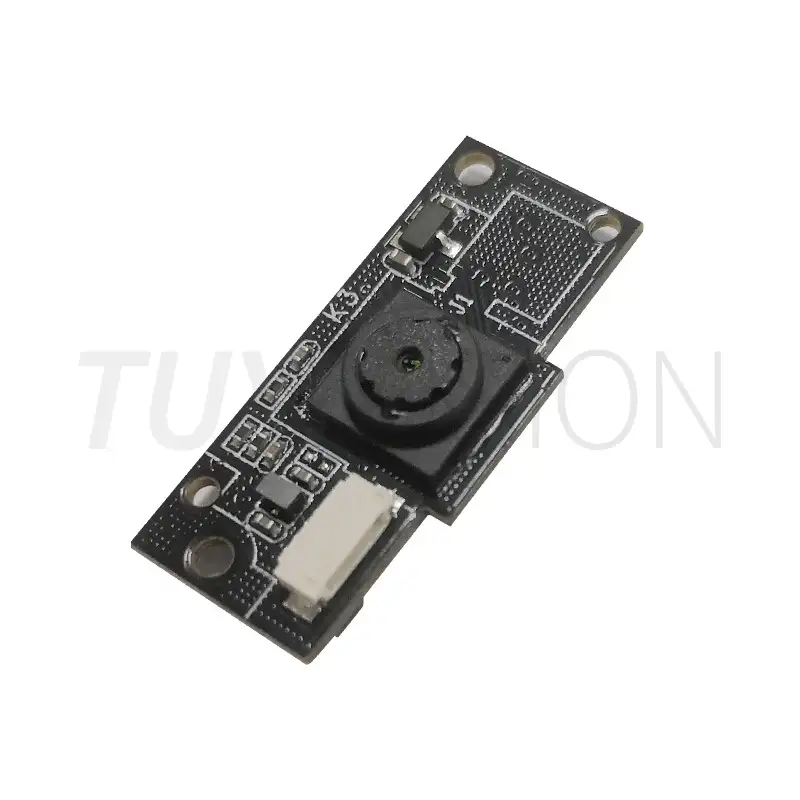
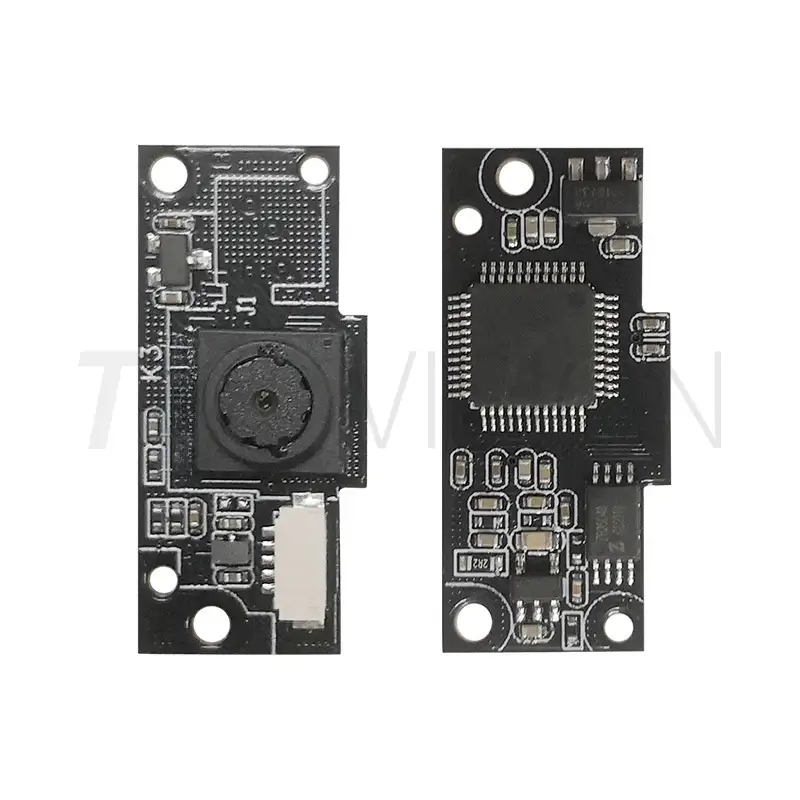
| Model | HX2M12J1 |
| Brand | TUXIVISION |
| Image Sensor | GC02M2 CMOS |
| Resolution | 2MP / 1600 × 1200 |
| Frame Rate | 30 FPS |
| Focus | Fixed Focus |
| Interface | USB 2.0 |
| Host Operating Systems | Windows / Android / Linux (Driver Required) |
| Customization | Custom Cable Length / Logo Customization |
| Product Weight | 5 g |
▐ Sensor Selection Introduction
The HX2M12J1 uses a GC02M2 CMOS image sensor, with a 2MP output and a maximum resolution of 1600 × 1200 at 30 FPS. Sensor choice in a new development project should be assessed against the required resolution, frame rate, image conditions, lens field of view, and the processing capability of the host platform. The sensor specification alone does not define the final image; lens characteristics, exposure settings, driver support, and host-side image processing also affect the result.
▐ Product Advantages
01
Validate the Imaging Chain Early
A sensor and lens combination should be tested under the actual lighting and working distance of the product. Early samples help reveal focus, exposure, field-of-view, and image-processing issues before the design is frozen.
02
Check Mechanical Fit Before Tooling
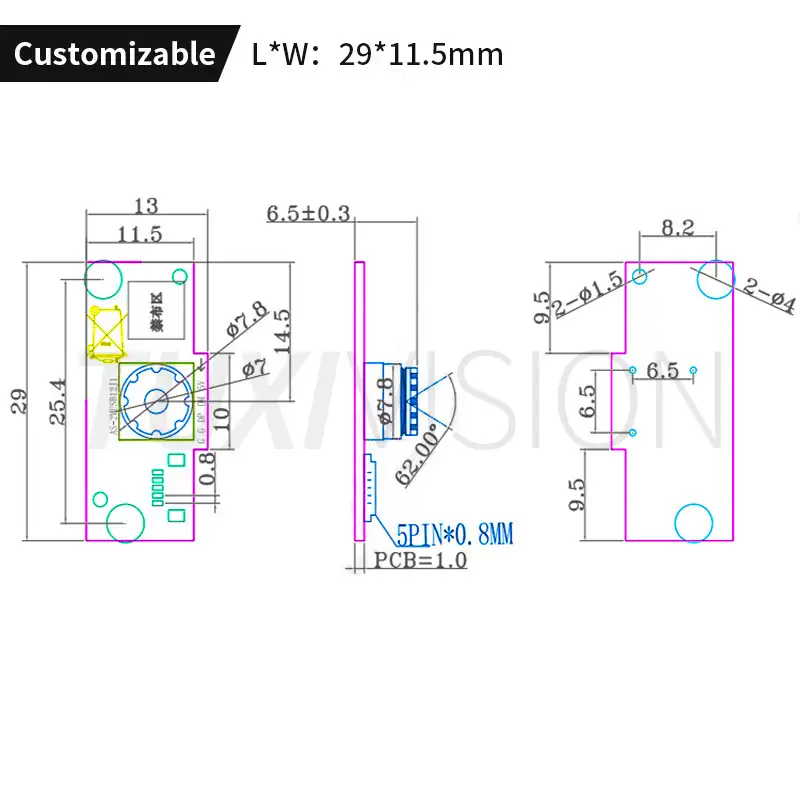
Board outline, component height, lens position, mounting points, and cable exit direction can affect the enclosure layout. A 3D-printed model can be used to review packaging and assembly clearances before committing to production tooling.
03
Repeatable Prototype Testing
Test fixtures make it easier to compare samples using the same connection, power, and test procedure. This is useful when several design revisions need to be checked against the same acceptance criteria.
04
A Clear Path from Sample to Production
Prototype findings can be fed back into component selection, PCB layout, cable definition, and mechanical design. Once the configuration is validated, the approved specification becomes the reference for production preparation.
▐ Why Choose Our Camera Module Development Service
Development Starts with Your System Constraints
A useful development brief includes the host processor, interface, available space, lens field of view, target resolution, frame rate, and operating conditions. Reviewing these constraints first helps avoid selecting components that cannot be integrated into the final product.
Prototype Iterations with Defined Checks
Each sample revision should address specific test findings. PCB changes, connector placement, cable routing, lens adjustments, and driver or platform compatibility can be reviewed as part of the iteration plan.
Prototype Work Linked to Manufacturing
A prototype should reflect practical assembly and inspection requirements, not just prove that the camera can produce an image. Design reviews can consider component availability, assembly access, test points, and the checks needed before a design moves toward volume production.
▐ Typical Product Application


▐ FAQ
Q1: What information is needed to start a camera module development project?
+
-
Start with the target application, required resolution and frame rate, preferred sensor if known, lens or field-of-view requirement, host processor, interface, available PCB space, cable or connector details, and expected quantity. A mechanical drawing or reference sample is also useful when the module must fit an existing enclosure.
Q2: Which parts of the camera module can be customized?
+
-
Depending on the project, customization may cover sensor and lens selection, PCB dimensions and layout, FPC or cable length, connector position, mechanical structure, and logo marking. The available changes depend on component availability and compatibility with the target platform.
Q3: Does the HX2M12J1 work with Windows, Android, and Linux?
+
-
The confirmed system support is Windows, Android, and Linux, and a driver is required. Driver version, host compatibility, and any platform-specific integration work should be checked with the target device and software environment.
Q4: How long does prototype development take?
+
-
Standard prototype delivery is planned within weeks after the final specification is signed off. The schedule may change with component lead times, PCB complexity, mechanical work, and the number of test-and-revision cycles required.
Q5: What should be validated before approving a prototype?
+
-
Check image output at the required resolution and frame rate, focus and field of view, USB connection, driver behavior on the target operating system, cable routing, mechanical fit, and operation in the intended environment. Acceptance criteria should be agreed before testing so that each revision can be evaluated consistently.
Hot Tags: camera module development, China camera module development manufacturers, 720p camera webcam, camera datasheet webcam, professional imaging module, security imaging module, surface mount imaging module, video call usb webcam


